
Search
Remove Ads
Advertisement
Search Results

Article
Chinese Lacquerware
Lacquer was a popular form of decoration and protective covering in ancient China. It was used to colour and beautify screens, furniture, bowls, cups, sculpture, musical instruments, and coffins, where it could be carved, incised...

Article
Swords in Ancient Chinese Warfare
Although the bow and crossbow were the weapons of choice for much of China's history, the sword played its part, especially when warriors were forced to dismount and face the enemy at close quarters. Widely used...
Article
Archers in Ancient Chinese Warfare
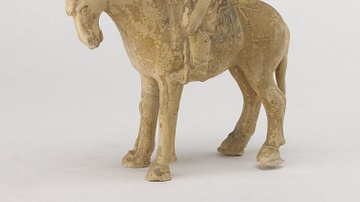
The bow was the most common weapon in ancient Chinese warfare and the skill of using it was the most esteemed martial art for millennia. Archers were used as infantry, chariot riders, and cavalry over the centuries...

Definition
Ancient China
Ancient China produced what has become the oldest extant culture in the world. The name 'China' comes from the Sanskrit Cina (derived from the name of the Chinese Qin Dynasty, pronounced 'Chin') which was translated as 'Cin' by...

Definition
Sushruta
Sushruta (c. 7th or 6th century BCE) was a physician in ancient India known today as the “Father of Indian Medicine” and “Father of Plastic Surgery” for inventing and developing surgical procedures. His work on the subject, the Sushruta...

Article
Mongol Multiculturalism
The Mongol Empire accepted and promoted many other cultures. Historians often talk about cultural exchange across Asia in the Mongol Empire as something that was just facilitated by peace and stability across such a huge...

Definition
Kublai Khan
Kublai Khan (Qubilai-Qan) was the ruler of the Mongol Empire from 1260 to 1294. His accomplishments include establishing Mongol rule in China under the name of the Yuan Dynasty (1271-1368), thus becoming the first non-Chinese to rule...

Article
Chariots in Ancient Chinese Warfare
The chariot was used in Chinese warfare from around 1250 BCE but enjoyed its heyday between the 8th and 5th century BCE when various states were constantly battling for control of China. Employed as a status symbol...

Article
Fortifications in Ancient Chinese Warfare
While ancient Chinese warfare was often characterised by large armies in pitched battles, siege warfare and the sacking of cities were also regular features. Huge earth walls with towers and encircling ditches...

Article
The Dragon in Ancient China
Dragons appear in the mythology of many ancient cultures but nowhere else in the world was the creature quite so revered as in China. There, in marked contrast to other world mythologies, the dragon was almost always...
