
Search
Remove Ads
Advertisement
Search Results

Video
Oracle Bones of the Ancient Chinese Shang Dynasty
Oracle bones or dragon bones were the shoulder blades of oxen or the flat underside of a turtle shell known as a plastron that were used for divination during the Shang Dynasty of China which dates between...

Definition
Taoism
Taoism (also known as Daoism) is a Chinese philosophy attributed to Lao Tzu (c. 500 BCE) which developed from the folk religion of the people primarily in the rural areas of China and became the official religion of the country under...

Definition
Wu Zetian
Empress Wu Zetian (Empress Consort Wu, Wu Hou, Wu Mei Niang, Mei-Niang, and Wu Zhao, l. 624-705 CE, r. 690-704 CE) was the only female emperor of Imperial China. She reigned during the Tang Dynasty (618-907 CE) and was one of the most...
Article
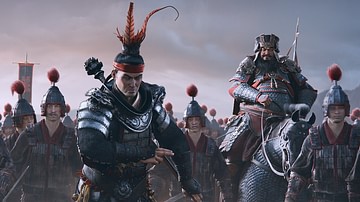
The Early Three Kingdoms Period
The Early Three Kingdoms Period in ancient China, from 184 CE to 190 CE for the purposes of this article, was one of the most turbulent in China's history. With an ailing Han government unable to control its empire...

Image
Map of the Iron Age La Tène Culture c.400 BCE - c.50 CE
This map illustrates the extent of the La Tène culture, a key phase of the European Iron Age that flourished from around 450 BCE until the Roman conquests in the 1st century BCE. It highlights the...

Definition
Sui Dynasty
The Sui Dynasty (581-618 CE) was a brief one with only two reigning emperors but it managed to unify China following the split of the Northern and Southern Dynasties period. As had happened previously in Chinese history, a short-lived...

Definition
Silk in Antiquity
Silk is a fabric first produced in Neolithic China from the filaments of the cocoon of the silk worm. It became a staple source of income for small farmers and, as weaving techniques improved, the reputation of Chinese silk spread...

Definition
Goguryeo
Goguryeo (Koguryo) was a kingdom which ruled northern Korea during the Three Kingdoms period from the 1st century BCE to 7th century CE. The kingdom flourished in the 5th and 6th century CE and has left a rich cultural heritage best...

Definition
Ancient Korean Coinage
The coinage of ancient Korea (pre-13th century CE) first employed Chinese coins, known locally as the oshuchon. Korean rulers began minting their own metal coins from the late 10th century CE, first in copper and iron, and...

Image
A Chinese Servant Statue
A servant statue, Western Han Period (206 BCE – 9 CE). Cernuschi Museum, Paris, France.
