
Search
Remove Ads
Advertisement
Search Results
Image
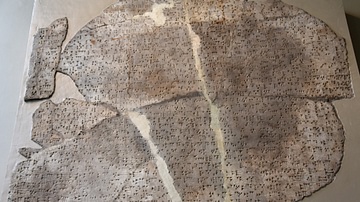
Door Slab from the Central Palace, Nimrud
These cuneifrom inscriptions describe some of the military campaigns of the Assyrian king Tiglath-pileser III (reigned 744-727 BCE) and were probably first placed in a doorway of the Central Palace built by...
Image
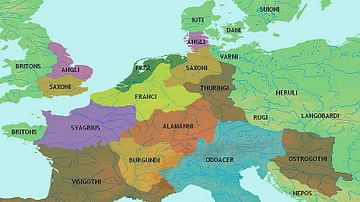
Central Europe 5th century CE
Map showing central Europe in the 5th century CE.

Image
Marine Mosaic in the Central Baths of Herculaneum
Marine mosaic floor decorating the apodyterium (changing room) of the women's baths in Herculaneum. The Central Baths at Herculaneum were built around the beginning of the 1st century CE and were divided...

Image
The Central Baths at Herculaneum
The Central Baths at Herculaneum were laid out around the beginning of the 1st century CE and were divided into separate (larger) men's and (smaller) women facilities, each with their sequence of changing room (apodyterium...

Image
Moon Idol from Central European Bronze Age
Clay figurine found in Chorvátsky Grob, Late Bronze Age. Slovak National Museum, Bratislava. Moon idols (Mondidole), also known as 'firedogs' (Feuerböcke), were clay figurines shaped like a dog or wolf...

Image
Central Gate & Pagoda, Horyuji Temple
The Chumon or central gate and five-storey pagoda of the Buddhist temple Horyuji, Nara, Japan. It is the most important Buddhist temple in Japan and was first built in 607 CE by Prince Shotoku during the Asuka...

Image
View from Staircase of Central Pillar and Loculi, Columbarium 1, Vigna Codini
The loculi in the central pillar of this columbarium in Rome (discovered in 1940 CE) seem to have been reserved for the elected officers of the funeral institution (The name of...

Image
The Central Fire
Central fire. Image by Pixabay on Pexels.com.
Image
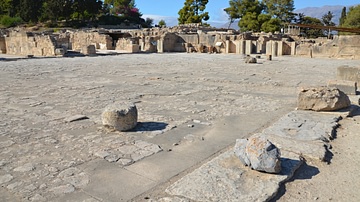
Central Courtyard, Phaistos, Crete
The Central Courtyard and East Apartments of the Minoan Palace of Phaistos, Crete (2000-1400 BCE).
Image
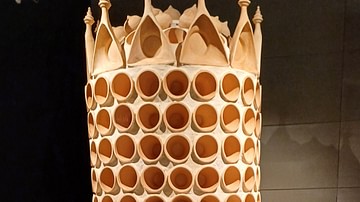
Clay Stove from Central Europe
Replica of a 16th-century earthenware stove with decorative tiles from around Šenkvice. Slovak National Museum, Bratislava. Central European clay stoves emerged in the late medieval period as an evolution of the...
