
Search
Remove Ads
Advertisement
Search Results

Article
Battles & Conquests Of The Ottoman Empire (1299-1683)
Spanning across three continents and holding dominance over the Black and Mediterranean Seas, the Ottoman Sultanate (1299-1922) was a global military superpower between the 15th and 17th centuries...

Article
Battle of Kiev in 1941
The Battle of Kiev (Kyiv) in July-September 1941 was a major Axis victory in Operation Barbarossa, Adolf Hitler's attack on the USSR during the Second World War (1939-45). Hitler wanted the resources of Ukraine since these...

Article
Wine in the Ancient Mediterranean
Wine was the most popular manufactured drink in the ancient Mediterranean. With a rich mythology, everyday consumption, and important role in rituals wine would spread via the colonization process to regions all...
Article
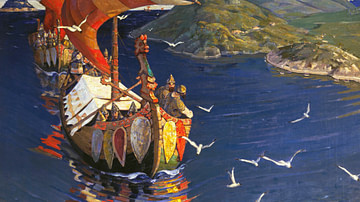
Trade & Warfare in the Kievan Rus
Scandinavians from the island of Gotland began to spread throughout the Baltic region along the Russian rivers in the 700s. While the Vikings of Norway and Denmark from the 8th to 11th centuries are widely recognized...
Article
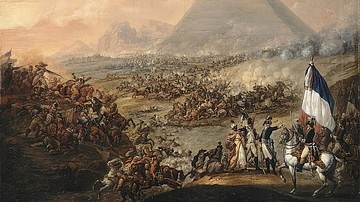
Battle of the Pyramids
The Battle of the Pyramids (21 July 1798), or the Battle of Embabeh, was a significant battle fought during Napoleon's Campaign in Egypt and Syria. On a battlefield 15 km (9 mi) away from the Great Pyramid of Giza, Napoleon...

Article
The Differences Between Byzantine & Armenian Christianity
Although both the Byzantines and the Armenians were Christian, the types of Christianity they professed had important differences that led to a lack of recognition and tensions between the two...

Article
Depictions of India in Ancient Literature
Herodotus (484 BCE – c. 425 BCE) has been called the Father of History since he was the first historian known to collect his materials in detail, test their accuracy to a certain extent and arrange them in...

Article
Wine Culture in the Hellenistic Mediterranean
The culture of drinking wine was enjoyed throughout the Mediterranean world, and what is true now was true in antiquity, too: wine is always good business. The Hellenistic Period (c. 335-30 BCE), between...

Article
Legions of Mesopotamia, Cappadocia, & Arabia
As the Roman Empire expanded further eastward, annexing territories that were once the domain of the Parthians, the legions of Mesopotamia, Cappadocia, and Arabia were called upon to safeguard these newly...

Article
Some new hypotheses on the problems of the Indo-Greek kingdoms
Warning: See the definitions of Greco-Bactrian and Indo-Greek Kingdoms before reading this article, otherwise the following lines could give you serious headaches! A lack of information is...
