
Search
Remove Ads
Advertisement
Search Results

Definition
Ashoka the Great
Ashoka the Great (r. 268-232 BCE) was the third king of the Mauryan Empire (322-185 BCE) best known for his renunciation of war, development of the concept of dhamma (pious social conduct), and promotion of Buddhism as well as...
Definition
Rashtrakuta Dynasty
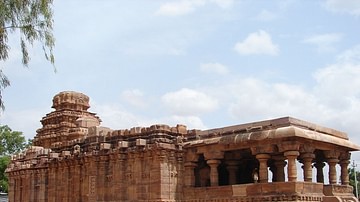
The Rashtrakuta Dynasty ruled parts of South India from the 8th to the 10th century CE. At its zenith, their kingdom included the modern state of Karnataka in its entirety along with parts of the current Indian states of Tamil...

Definition
War of the Third Coalition
The War of the Third Coalition (1805-1806) was a major European conflict during the Napoleonic Wars (1803-1815). It was fought by an alliance of nations that included the United Kingdom, Russia, Austria, Sweden, Naples...

Article
Women in Ancient Mesopotamia - Celebrating the Feminine Principle in the Near East
The lives of women in ancient Mesopotamia cannot be characterized as easily as with other civilizations, owing to the different cultures over time. Generally speaking, though...

Definition
The Great Game - Britain and Russia's Imperial Rivalry
The Great Game describes the rivalry between the British and Russian empires through the 19th century. The game was primarily concerned with the control of certain regions in Central Asia and the...

Definition
Constantine V
Constantine V, also known as Constantine the Dung-named by his enemies, was emperor of the Byzantine empire from 741 to 775 CE. He enjoyed military successes in the Middle East and Balkans but his reign is chiefly remembered for...

Definition
Nikephoros II Phokas
Nikephoros II Phokas was Byzantine emperor from 963 to 969 CE. Known as “White Death of the Saracens,” Nikephoros was a fearsome commander who conquered Crete, Cilicia, and much of Syria. While he is known as a great military...

Definition
Joséphine de Beauharnais
Joséphine de Beauharnais (1763-1814) was a French noblewoman who was the first wife of Napoleon Bonaparte (1769-1821). She was therefore Empress of the French from 18 May 1804 until the annulment of her marriage on 10 January...

Definition
Byzantium
The ancient city of Byzantium was founded by Greek colonists from Megara around 657 BCE. According to the historian Tacitus, it was built on the European side of the Strait of Bosporus on the order of the “god of Delphi” who said to...

Definition
Persepolis
Persepolis was the capital of the Persian Achaemenid Empire from the reign of Darius I (the Great, r. 522-486 BCE) until its destruction in 330 BCE. Its name comes from the Greek Perses-polis (Persian City), but the Persians knew...
