
Search
Remove Ads
Advertisement

 This answer was generated by
 Search Results

Definition
Byzantine Empire
The Byzantine Empire existed from 330 to 1453. It is often called the Eastern Roman Empire or simply Byzantium. The Byzantine capital was founded at Constantinople by Constantine I (r. 306-337). The Byzantine Empire varied in size over the...

Definition
Byzantine Architecture
The architecture of the Byzantine Empire (4th - 15th century CE) continued its early Roman traditions but architects also added new structures to their already formidable repertoire, notably improved fortification walls and domed churches...

Definition
Byzantine Art
Byzantine art (4th - 15th century CE) is generally characterised by a move away from the naturalism of the Classical tradition towards the more abstract and universal, there is a definite preference for two-dimensional representations, and...
Definition
Mosaic
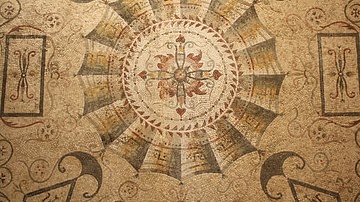
Mosaics are designs and images created using small pieces (tesserae) of stone or other materials which have been used to decorate floors, walls, ceilings, and precious objects since before written records began. Like pottery, mosaics have...

Article
Byzantine-Armenian Relations
The relationship between the Byzantine Empire and ancient Armenia was a constant and varied one with an equal mix of wars, occupations, treaties of friendship, mutual military aid, and cultural exchange. Regarded as a vital defence to the...
Definition
Despotate of Epirus
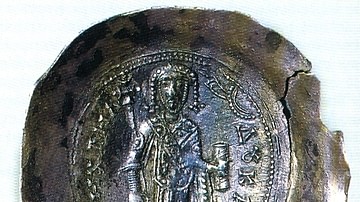
The Despotate of Epirus was one of the successor states of the Byzantine Empire when it disintegrated following the Fourth Crusade's capture of Constantinople in 1204 CE. It was originally the most successful of those successor states, coming...

Article
Women in the Byzantine Empire
Women in the Byzantine Empire (4th to 15th century CE) were, amongst the upper classes, largely expected to supervise the family home and raise children while those who had to work for a living did so in most of the industries of the period...
Image
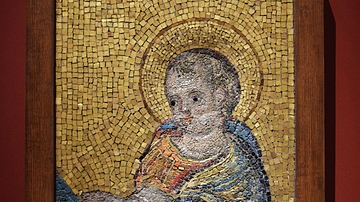
Byzantine Mosaic of Christ Child
This mosaic of Jesus Christ as a child is rendered in Byzantine style and made by Jacopo Torriti (or "Turriti"). Torriti was an Italian painter and mosaic-maker during the late 13th century CE. He lived and worked in Rome, Italy. (Pushkin...
Image
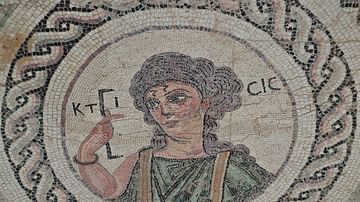
Byzantine Mosaic with a Personification of Ktisis
Byzantine mosaic emblema in the House of Eustolios in Kourion (Cyprus) depicting a young woman in a medallion holding a measuring instrument equating to a Roman foot. The Greek inscription identifies her as Ktisis, the personification of...
Image
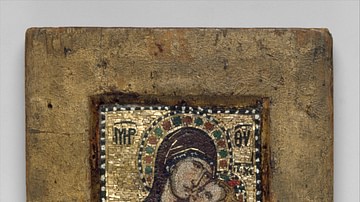
Byzantine Mosaic Icon with the Virgin Eleousa
Portable icon of the Virgin and Child of the Eleousa type, the Virgin of Tenderness, miniature mosaic made of many tiny tesserae (mosaic stones), set in wood, early 14th century.
Metropolitan Museum of Art, New York.
