
Search
Remove Ads
Advertisement
Search Results
Definition
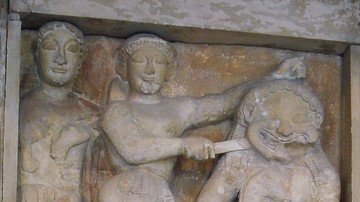
Perseus
Perseus is one of the greatest and oldest pan-Hellenic heroes of Greek mythology. Perseus famously killed the dreaded Medusa, a Gorgon with snakes as hair and whose stare turned men to stone. Perseus also carried out the daring rescue...

Definition
Agni
Agni is the Hindu god of fire. He is regarded as the friend and protector of humanity, in particular, he safeguards the home. Various forms of fire are associated with Agni and include the sun, lightning, comets, sacrificial fire, domestic...

Definition
Ganges - The Sacred Hindu River
The River Ganges, also known as the Ganga, flows 2,700 km from the Himalaya mountains to the Bay of Bengal in northern India and Bangladesh. Regarded as sacred by Hindus, the river is personified as the goddess Ganga...

Definition
Greek Archaic Period
The Greek Archaic Period (c. 800-479 BCE) started from what can only be termed uncertainty, and ended with the Persians being ejected from Greece for good after the battles of Plataea and Mykale in 479 BCE. The Archaic Period...
Definition
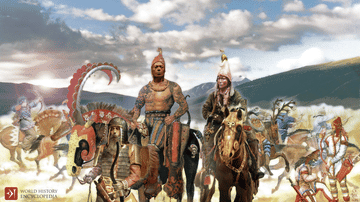
Scythians
The Scythians were a nomadic people whose culture flourished between the 7th and 3rd century BCE in a territory ranging from Thrace in the west, across the steppe of Central Asia, to the Altai Mountains of Mongolia in the east. This...

Definition
Kingdom of Benin
The Kingdom of Benin, located in the southern forests of West Africa (modern Nigeria) and formed by the Edo people, flourished from the 13th to 19th century CE. The capital, also called Benin, was the hub of a trade network exclusively...

Definition
Zeus
Zeus was the king of the 12 Olympian gods and the supreme god in Greek religion. Zeus is often referred to as the Father, as the god of thunder, and the 'cloud-gatherer'. Zeus controlled the weather and offered signs and omens. Zeus generally...
Definition
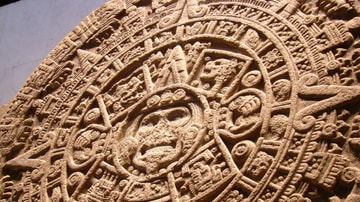
Tonatiuh
Tonatiuh, 'Turquoise Lord,' was the 5th and present sun in the Aztec view of the cosmos and the fierce sun god of several other Postclassic Mesoamerican cultures, including the Toltecs. It was thought that only the regular offering...
Definition
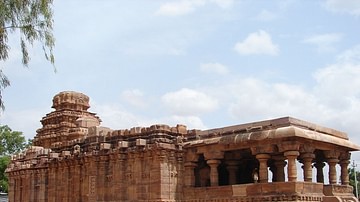
Rashtrakuta Dynasty
The Rashtrakuta Dynasty ruled parts of South India from the 8th to the 10th century CE. At its zenith, their kingdom included the modern state of Karnataka in its entirety along with parts of the current Indian states of Tamil...

Definition
Shimabara Rebellion
The Shimabara Rebellion was a peasant uprising that occurred from 17 December 1637 to 15 April 1638 in Japan's southern island of Kyushu. Economic desperation, famine, and religious persecution led the peasants of the Shimabara...
