
Search

 This answer was generated by
 Search Results
Image
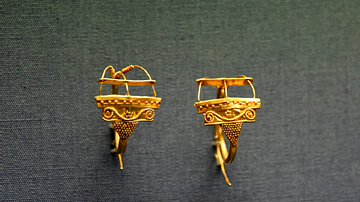
Gold Earrings from Bubastis
A pair of gold earrings. Said to be from Bubastis, in modern-day Egypt. Roman period, 1st to 2nd century CE. (The British Museum, London).

Definition
Bastet
Bastet is the Egyptian goddess of the home, domesticity, women's secrets, cats, fertility, and childbirth. She protected the home from evil spirits and disease, especially diseases associated with women and children. As with many deities...

Article
Cats in the Ancient World
Cats and humans have shared in each other's lives for thousands of years and, even though they have not always been regarded as highly as in the present, have played an important role in a number of cultures. Always enigmatic, the cat has...
Definition
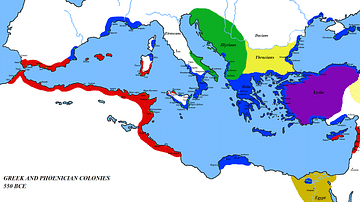
Uat-Ur
Uat-Ur was the ancient Egyptian name for the Mediterranean Sea (also known as Wadj-Wer) and is translated as 'the Great Green'. Uat-Ur was understood as a living entity imbued with the spirit of the divine which, like all other aspects of...

Article
The Battle of Pelusium: A Victory Decided by Cats
The ancient Egyptians had a great reverence for life in all its forms. Life had been given by the gods and reverence for it extended beyond human beings to all living things. Although the Egyptians did occasionally eat meat, and their royalty...
Article
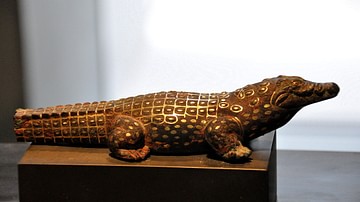
Pets in Ancient Egypt
Pets were very important to the ancient Egyptians and considered gifts from the gods to be cared for until their death when they were expected to be returned to the divine realm from which they had come. In life, pets were well cared for...

Article
Festivals in Ancient Egypt
The gods of the ancient Egyptians were always apparent to the people through natural events. The sunrise was Ra emerging from the underworld in his great ship, for example, and the moon was the god Khonsu traveling across the night sky. When...

Article
Herodotus on Cats in Egypt
The Greek historian Herodotus provides an accurate description of the devotion of the ancient Egyptians to cats in Book II of his Histories, but this passage is often cited out of context. Chapters II.66-67 are frequently anthologized without...

Article
Setna I: A Detailed Summary & Commentary
Setna I (also Setna Khaemaus and the Mummies) is a work of ancient Egyptian literature from the Ptolemaic Period (323-30 BCE) written in demotic script. It is part of a cycle of stories known as the Tales of Prince Setna featuring a character...
Image
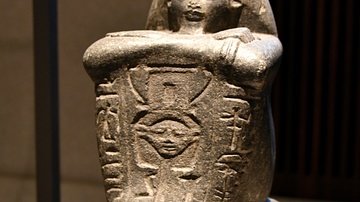
Statue of Sen-nefer
Block statue of Sen-nefer. He was the chief steward of the pharaoh as well as a priest of several ancient Egyptian deities. Granodiorite. New Kingdom, 18th Dynasty, reign of Amenhotep III, 1388-1351 BCE. Probably from Bubastis (Tell-Basta...
