
Search
Remove Ads
Advertisement

 This answer was generated by
 Search Results
Image
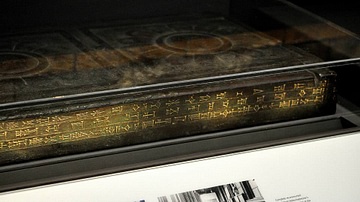
A bronze door-slab from Ezida Temple, Borsippa
This door-slab came from the lower part of a flight of steps in the Temple of Ezida in Borsippa, part of the building works of the Babylonian king Nebuchadnezzar II (604-562 BCE). The recess is for a door-post...
Image
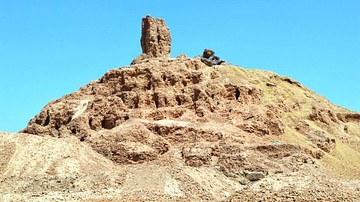
Ziggurat and Temple of God Nabu, Borsippa
The temple to Nabu at Borsippa was destroyed in 484 BCE during the suppression of a revolt against the Achaemenid king Xerxes.
Modern Biris Namrud, Babil Governorate, Iraq.
Image
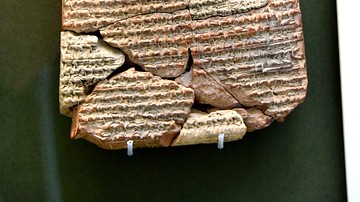
Medical Recipes from Borsippa Against Mental Disorders
Alongside recipes (derived from various plants) to address mental illnesses, this tablet provides unique drawings as a guide to making magical figurines against demons and sickness. The king-like...

Image
The Top of the Ziggurat and Temple of Nabu at Borsippa
The so-called "tongue tower" lies at the top of the ruins of the ziggurat and temple of Nabu at the ancient city of Borsippa, in modern-day Babel Governorate, Iraq. 6th century BCE.

Image
Ruins of the Ziggurat and Temple of Nabu at Borsippa
The so-called "tongue tower" at the top of the ruins of the ziggurat and temple of Nabu, at the ancient city of Borsippa, built in the 6th century BCE.
Biris Namrud, Babil Governorate, Iraq.
Image
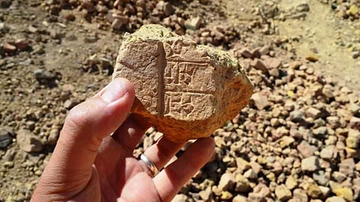
Stamped Brick From Borsippa
A stamped mud-brick with a cuneiform inscription. From the ziggurat and temple of God of Nabu Borsippa, Babel Governorate, Iraq. The temple and ziggurat were destroyed in 484 BCE during the suppression of a revolt against...

Image
A Stamped Mud Brick, Borsippa
Stamped mud brick from the temple and ziggurat of God Nabu. Borsippa, Mesopotamia, Iraq.

Image
The Tongue Tower, Temple of Nabu, Borsippa
The ziggurat, the "Tongue Tower," today one of the most vividly identifiable surviving ziggurats, is identified in the later Talmudic and Arabic culture with the Tower of Babel. However, modern scholarship...

Definition
Nabu - The Babylonian God of Wisdom and Writing
Nabu (sometimes known as Tutu) was the Babylonian god of wisdom, learning, prophecy, scribes, and writing, also responsible for the abundant harvest and all growing things. His name means "the Announcer,"...
Article
Festivals in Ancient Mesopotamia - Courting the Goodwill of the Gods
Festivals in ancient Mesopotamia honored the patron deity of a city-state or the primary god of the city that controlled a region or empire. The earliest, the Akitu festival, was first...
