
Search
Remove Ads
Advertisement
Search Results

Definition
Scythian Art
Scythian art is best known for its 'animal art.' Flourishing between the 7th and 3rd centuries BCE on the steppe of Central Asia, with echoes of Celtic influence, the Scythians were known for their works in gold. Moreover, with the...

Definition
Gold Beach
Gold Beach was the central of the five Allied D-Day Normandy landings of 6 June 1944. Primarily British units, with massive naval and air support, were set the task of taking the beach, a feat achieved by the end of the day, using...

Definition
Artaxerxes II
Artaxerxes II (r. 404-358 BCE, also known as Artaxerxes II Mnemon) was the 10th monarch of the Achaemenid Empire (c. 550-330 BCE). He was the son of Darius II (r. 424-404 BCE) and Parysatis (who was Darius II's half-sister) and...
Article
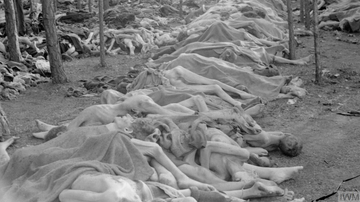
Eyewitness Accounts of the Holocaust
The Holocaust was the murder of 6 million Jewish people by the SS, Gestapo, and other organisations of Nazi Germany and its allies in the years prior to and through the Second World War (1939-45). Innocent men...

Article
Why Was Fascism Obsessed With Sports?
Can physical education be part of a totalitarian project to control and reshape the masses? Both the leader of Fascist Italy, Benito Mussolini (1883-1945), and the leader of Nazi Germany, Adolf Hitler (1889-1945...
Article
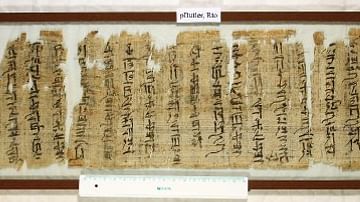
The Eloquent Peasant & Egyptian Justice
The Tale of the Eloquent Peasant is a literary work from the Middle Kingdom of Egypt (2040-1782 BCE) which illustrates the value society placed on the concept of justice and equality under the law. In the story...

Article
Hitler's Occupation of Czechoslovakia
Throughout 1938, Adolf Hitler (1889-1945), the leader of Nazi Germany, threatened to occupy the Sudetenland region of Czechoslovakia. The excuse presented was that Sudeten Germans were being repressed but Hitler...
Article
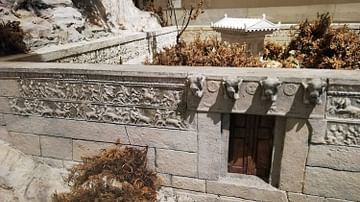
The Heroon of Trysa: A Lycian Tomb Reappears
The Heroon of Trysa was the tomb of a powerful Lycian dynast surrounded by a precinct wall covered with remarkable mythological friezes. It was discovered in 1841 CE when a Polish-Prussian school teacher...

Article
Michelangelo's Sistine Chapel Ceiling
In 1508 CE the Pope commissioned the celebrated Florentine sculptor and painter Michelangelo (1475-1564 CE) to paint scenes on the ceiling of the Vatican's Sistine Chapel. The walls of the chapel had already received...

Article
Herod the Great's Building Program
Herod the Great was the king of Judea from 37-4 BCE. As a client king of Rome, Herod's moniker as "Great" was due more to his grand building program throughout the eastern Mediterranean world. Herod's building program...
