
Search
Remove Ads
Advertisement
Search Results

Image
Glazed-bricks of the processional street
A close-up view of some glazed-bricks of the side walls of the processional street at Babylon. The street and its Ishtar Gate were built by King Nebuchadnezzar II. From Babylon, Mesopotamia, Iraq. Neo-Babylonian...
Image
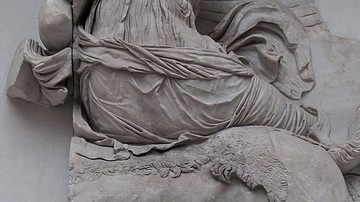
Selene
The moon goddess Selene is riding on her mule over one of the giants. Detail from the Pergamon Altar's frieze (The frieze depicts the Gigantomachy); built in 2nd century BCE; Today in the Pergamon Museum in Berlin.

Image
Ishtar Standing on a Lion
This terracotta plaque depicts the goddess Ishtar standing on a lion. From Mesopotamia, modern-day Iraq. Old-Babylonian Period, 19th to 17th century BCE.
Pergamon Museum, Berlin.
Image
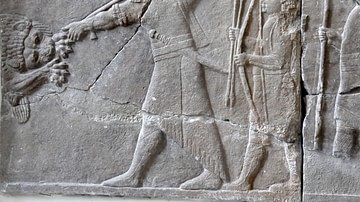
Assyrian Lion Hunt Relief, Nineveh
Gypsum wall relief depicting the typical royal hunting of lions, part of a longer sequence. The king, Ashurbanipal II, thrusts a spear onto a leaping and furious lion. Behind him, an Elamite squire assists him...

Image
Bare-headed Apkallu with Four Wings
This fragmented alabaster bas-relief depicts an Assyrian Apkallu, a protective spirit or genie. The striking features are that he is bare-headed (he does not wear a horned helmet or diadem) and his four wings...
Image
Silver from Sam'al
This rounded piece of silver (which is part of a hack silver) was used as a method of payment. Its weigh is 497.38 g. The overlying Aramaic inscription mentions that this is a property of Barrakib, son of Panammuwa, Prince of...

Image
Statuette of Warrior from Syria
This a copper statuette of a warrior wearing a short kilt. He was probably holding weapons in his hands. Many similar statuettes were found and all of them were probably made in Lebanon. The characteristic features...

Image
Medea Sarcophagus
Roman sarcophagus with relief depicting four scenes from the myth of Medea following the homonymous tragedy by the Athenian poet Euripides. Topics from Greek mythology were a popular motif in Rome for sarcophagus reliefs, especially...

Image
Funerary Figurine of a Servant
This statuette is made of wood, as a piece of funerary equipment, and depicts a female servant. New Kingdom, 18th Dynasty, reign of Amenhotep III, 1388-1351 BCE. Probably from Thebes, Egypt. (The Neues Museum, Berlin...
Image
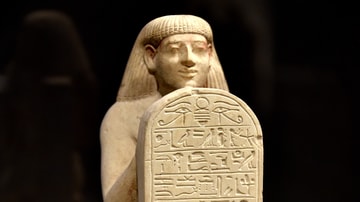
Stela of Scribe Amenemhat
Kneeling statue of Amenemhat, holding a stela and praying to the sun. He was the scribe of the grain of Amun. Limestone. New Kingdom, 18th Dynasty, reign of Amenhotep III, 1388-1351 BCE. From Egypt, precise provenance...
