
Search
Remove Ads
Advertisement
Search Results
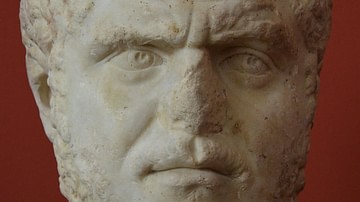
Image
Caracalla, Ny Carslberg Glyptotek
A 3rd century CE marble bust of Roman Emperor Caracalla (reign: 209 – 211 CE). (Ny Carlsberg Glyptotek, Copenhagen).
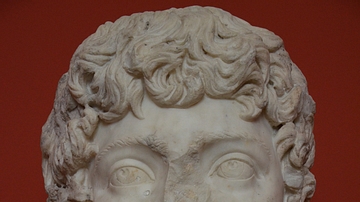
Image
Young Caracalla
Portrait of young Caracalla, from Rome, c. 203-204 CE. (Ny Carlsberg Glyptotek, Copenhagen)
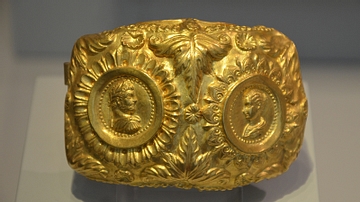
Image
Gold armband with emperor Caracalla and empress Plautilla
Gold armband with coins of Caracalla and his wife Plautilla, 202–205 CE. (Altes Museum, Berlin)

Video
The Famous Baths of the Roman Empire
Roman Baths were designed for bathing and relaxing and were a common feature of cities throughout the Roman empire. Baths included a wide diversity of rooms with different temperatures, as well as swimming pools...

Image
The Baths of the Roman Empire - The Architecture of Daily Life
Public bathhouses (balnea and large imperial thermae) were a defining feature of urban life across the Roman Empire (27 BCE–476 CE in the West). Building on earlier bathing traditions in the...
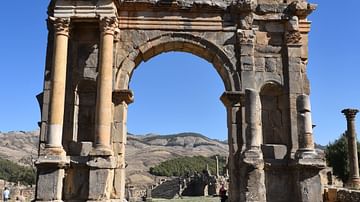
Image
Arch of Caracalla, Cuicul (Djémila)
The arch of Caracalla (r. 211-217 CE) at Cuicul (modern Djémila in Algeria) marked the western entrance to the Severan Forum and the city itself. It was erected in 216 CE by the inhabitants of Cuicul in honour...
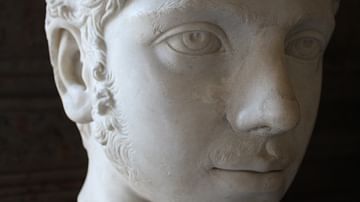
Definition
Elagabalus
Elgabalus was Roman emperor from 218 to 222 CE. Having failed to keep many of his promises to the army, Roman Emperor Macrinus (217 – 218 CE) was becoming increasingly unpopular, and it would only take a little lie from a young boy's...

Article
Treasures of Roman Tunisia - 10 Key Sites Explored
Set on the North African coast, Tunisia is home to some of the finest Roman ruins in the Mediterranean. After the fall of Carthage, Rome transformed the region into the prosperous province of Africa...

Image
Frigidarium of the Roman Baths in Varna
The frigidarium (cold room) of the Roman Baths of Odessos (modern-day Varna, Bulgaria). The baths were built around the end of the 2nd and the beginning of the 3rd century CE under Roman emperor Septimius Severus...
Image
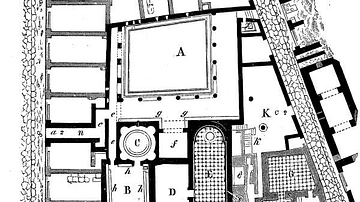
Plan of the Old Baths of Pompeii
Plan of the Old Baths at Pompeii. Legend A — atrium B — apodyterium (room for undressing) C — frigidarium (cool bath) D — tepidarium (warm room) E — caldarium (hot bath) F — thermal chamber G — women's tepidarium...
