
Search
Remove Ads
Advertisement
Search Results

Article
Müntzer's Vindication and Refutation
The Vindication and Refutation of Thomas Müntzer (l. c. 1489-1525) is a 1524 open letter to Jesus Christ, Martin Luther (l. 1483-1546), and the Christian community charging Luther with hypocrisy, betraying his...

Article
Old Testament Pseudepigrapha
The Old Testament Pseudepigrapha are the non-canonical writings of Judaism and Christianity, ranging from the 5th century BCE to the 9th century CE. Pseudepigrapha comes from a Greek noun denoting writings with a false...

Article
The Iraq Museum & Three Wars: Three Steps from Hell
This article documents and elaborates on the many critical behind-the-scenes events, unknown to the public, before the history leaves us. The author The bulk of the “the land between the two rivers”...

Article
Historical Problems in the Trial(s) & Crucifixion in the Gospels
The story of the trial and crucifixion of Jesus Christ is reenacted every year by Christians all over the world in the Easter liturgy. The story has become an essential article of faith and...

Article
The Separation of Christianity from Judaism
In the mid-2nd century CE, Christianity began a gradual process of identity-formation that would lead to the creation of a separate, independent religion from Judaism. Initially, Christians were one of many...

Article
Napoleon Bonaparte During the Early French Revolution (1789-1794)
Of all the careers that soared to meteoric heights during the chaotic decade of the French Revolution (1789-1799), none was more spectacular nor impactful than that of Napoleon Bonaparte...

Article
Why Kokopelli is Not Kokopelli: Paiyatamu & The Four Flutes
The iconic image of Kokopelli, the flute-playing kachina spirit of the Pueblo peoples, specifically the Hopi, is easily the most recognizable figure from Native American culture in the Southwest...

Article
The Hellenistic World: The World of Alexander the Great
The Hellenistic World (from the Greek word Hellas for Greece) is the known world after the conquests of Alexander the Great and corresponds roughly with the Hellenistic Period of ancient Greece...
Definition
War in Ancient Times
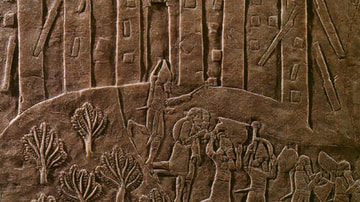
The word 'war' comes to English from the old High German language word Werran (to confuse or to cause confusion) through the Old English Werre (meaning the same), and is a state of open and usually declared armed conflict...

Definition
Pisistratus - Tyrant of Ancient Athens
Pisistratus (circa 600-527 BCE), or Peisistratus, was an ancient Greek tyrant who ruled the city-state of Athens. Initially a student of the lawgiver and political philosopher Solon, Pisistratus presented himself...
