
Search
Remove Ads
Advertisement
Search Results
Image
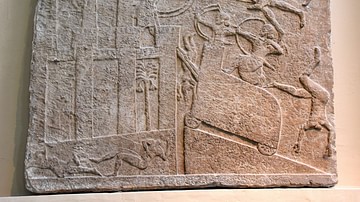
Babylonian City under Assyrian Siege
Assyrian relief showing a siege, from the Central Palace at Nimrud (ancient Kalhu), Mesopotamia, Iraq. Date palms indicate that the city, most of which was on an adjacent slab, was probably Babylonia. The Assyrians have built a siege ramp...
Image
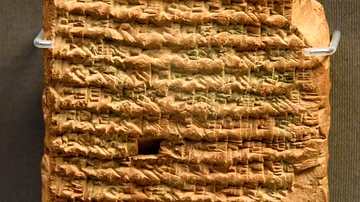
Babylonian Tablet Mentioning Coin Payments
This tablet records the exact coins required for transaction in Babylon. Because coins could circulate for many years, freshly minted coins were less worn and had a better silver weight. The tablet specifies the "staters of Seleucus with...
Image
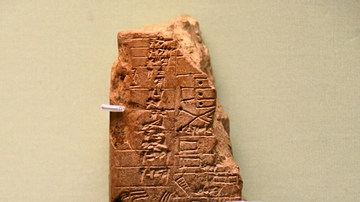
Secret Babylonian Numbers
A compendium of ancient signs united the knowledge of generations of scholars. It includes pictographic symbols from around 3000 BCE and a secret number for each sign, for encoding texts. Circa 450 BCE. Clay tablet. From Babylon, Mesopotamia...
Image
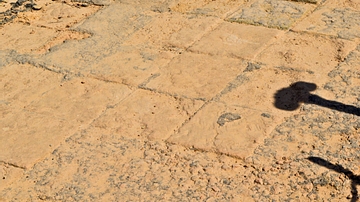
Babylonian Cobblestones
A close-up view of the original cobblestones of the Processional Street at Babylon. Note the black bitumen!

Definition
Tukulti-Ninurta I
Tukulti-Ninurta I (reigned 1244-1208 BCE) was a king of the Assyrian Empire during the period known as the Middle Empire. He was the son of Shalmaneser I (reigned 1274-1245 BCE) who had completed the work of his father, Adad Nirari I, in...
Article
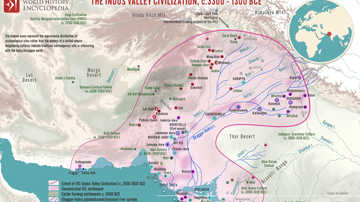
Religious Developments in Ancient India
For well over 1,000 years, sacred stories and heroic epics have made up the mythology of Hinduism. Nothing in these complex yet colourful legends is fixed and firm. Pulsing with creation, destruction, love, and war, it shifts and changes...
Video
Babylonian Bricks (82nd & Fifth)
http://82nd-and-fifth.metmuseum.org/bricks Explore this object: http://82nd-and-fifth.metmuseum.org/two-panels-with-striding-lions-babylonian-31.13.1-.2 "It always had this possibility to come alive in a very real sense." 82nd &...

Article
The Spread of Islam in Ancient Africa
Following the conquest of North Africa by Muslim Arabs in the 7th century CE, Islam spread throughout West Africa via merchants, traders, scholars, and missionaries, that is largely through peaceful means whereby African rulers either tolerated...

Definition
Nebuchadnezzar II
Nebuchadnezzar II (r. 605/604-562 BCE) was the greatest King of ancient Babylon during the period of the Neo-Babylonian Empire (626-539 BCE), succeeding its founder, his father, Nabopolassar (r. 626-605 BCE). He is best known from the biblical...

Definition
Babylon - The Gate of the Gods
Babylon is the most famous city from ancient Mesopotamia, whose ruins lie in modern-day Hillah, Iraq, 59 miles (94 km) southwest of Baghdad. The name is derived from bav-il or bav-ilim, which in Akkadian meant "Gate of God" (or "Gate of the...
