
Search
Remove Ads
Advertisement
Search Results

Article
The Newly Discovered Tablet II of the Epic of Gilgamesh
Surpassing all other kings, heroic in stature, brave scion of Uruk, wild bull on the rampage! Going at the fore he was the vanguard, going at the rear, one his comrades could trust...
Image
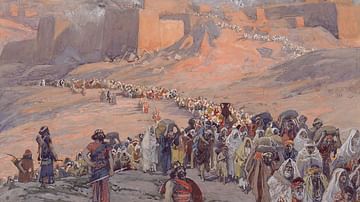
The Flight of the Prisoners
A painting portraying the flight of Judeans from the ancient Kingdom of Judah. Judeans became captives in Babylon, the capital city of the Neo-Babylonian Empire. Gouache on board. Created by James Jacques Joseph Tissot...

Definition
Yahweh
Yahweh is the name of the state god of the ancient Kingdom of Israel and, later, the Kingdom of Judah. His name is composed of four Hebrew consonants (YHWH, known as the Tetragrammaton) which the prophet Moses is said to have revealed...
Article
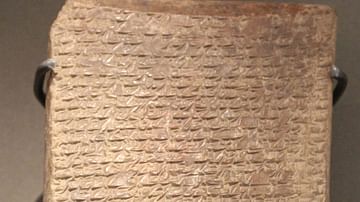
Ludlul-Bel-Nemeqi
The Ludlul-Bel-Nemeqi (c. 1700 BCE) is a Sumerian and later Babylonian poem on the theme of unjust suffering, which is thought to have influenced the biblical Book of Job. Also known as The Poem of the Righteous Sufferer, the...
Definition
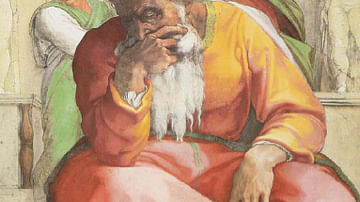
Jeremiah
Jeremiah (c. 650-570 BCE) was a major prophet of Israel in the Hebrew Bible. In addition to his book of prophecy, he is also credited with writing the Books of Kings and Lamentations (perhaps written by his scribe, Baruch). Called to...

Definition
Pazuzu - The Mesopotamian Demon of Destruction and Protection
Pazuzu is a Babylonian/Assyrian demon who was most popular in the first millennium BCE. He was the son of Hanbi (also Hanba), king of the demons of the underworld, and brother of Humbaba, the...

Definition
Gilgamesh - The Historical and Mythical King
Gilgamesh is the semi-mythic King of Uruk, best known as the hero of The Epic of Gilgamesh (circa 2100 to circa 1200 BCE), the great Babylonian poem that predates Homer's Iliad and Odyssey by 1500 years and...

Definition
Marduk - The Great God of Babylon
Marduk was the patron god of Babylon who presided over justice, compassion, healing, regeneration, magic, and fairness, although he is also sometimes referenced as a storm god and agricultural deity. He rose to prominence...

Definition
Library of Ashurbanipal
The Library of Ashurbanipal (7th century BCE) is the oldest known systematically organized library in the world, established in Nineveh by the Neo-Assyrian king Ashurbanipal (r. 668-627 BCE) to preserve the history and culture...

Article
Visiting the Ancient City of Babylon
We had a 4-day national holiday. Meaning what? No clinic and no hospital! I said to myself, “It's been a long time since I have visited Babylonia.” I drove my car for about 11 hours, continuously. Finally, I was...
