
Search
Remove Ads
Advertisement
Search Results
Article
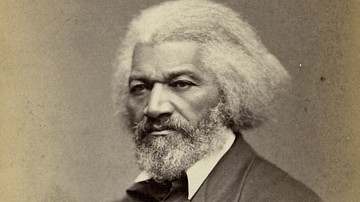
What to the Slave is the Fourth of July? - Frederick Douglass' Challenge to America
"What, to the Slave, is the Fourth of July?" is Frederick Douglass' masterwork of oration, delivered on 5 July 1852 at the Corinthian Hall in Rochester, New York. Also sometimes given as "What, to the Slave, is your Fourth of July?", the...

Article
Trade in Ancient Mesopotamia - How Commerce Encouraged Civilization
Local trade in ancient Mesopotamia began in the Ubaid period (circa 6500-4000 BCE), had developed into long-distance trade by the Uruk period (circa 4000-3100 BCE), and was flourishing by the time of the Early Dynastic period in Mesopotamia...

Article
Clotilda, the Last Slave Ship - Greed, Rebellion, and Ultimate Triumph
It began with a bet in 1859 and would end in a burning in 1860, but, for the 110 African men, women, and children who had been illegally smuggled into the United States aboard the Clotilda, the flames that engulfed it were only the beginning...
Article
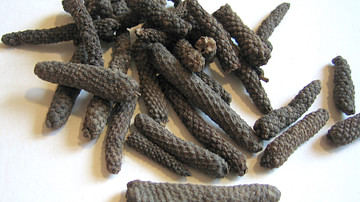
Middle Eastern Power Shifts & the Trade of Pepper from East to West
Pepper has long been the king of spices and for almost 2,000 years dominated world trade. Originating in India, it was known in Greece by the 4th century BCE and was an integral part of the Roman diet by 30 BCE. It remained a force in Europe...

Article
Trade in Ancient Egypt
Trade has always been a vital aspect of any civilization whether at the local or international level. However many goods one has, whether as an individual, a community, or a country, there will always be something one lacks and will need...

Article
The Heroic Slave - Frederick Douglass' Novella of the Creole Mutiny
Abolitionist author, orator and statesman Frederick Douglass (1818-1895) is well-known for his speeches, autobiography, and other works addressing the issue of slavery in the United States in the 19th century, but, in 1853, he wrote his only...

Article
Global Trade in the 13th Century
In the 13th century, astonishing quantities of spices and silk passed from the Far East to Europe. Exact amounts are not known, but spice popularity in both cuisine and medicine reached its historical peak during the Middle Ages in Europe...

Article
The Spice Trade & the Age of Exploration
One of the major motivating factors in the European Age of Exploration was the search for direct access to the highly lucrative Eastern spice trade. In the 15th century, spices came to Europe via the Middle East land and sea routes, and spices...

Article
Indian Ocean Trade before the European Conquest
Finding a maritime route to the East and gaining access to the lucrative spice trade stood at the root of the European Age of Exploration. However, when Vasco da Gama rounded the Cape of Good Hope and reached the Indian Ocean in 1493, he...

Image
African Slave Trade, c. 1500-1900
African Slave Trade, map by KuroNekoNiyah, 2021. This map provides an overview of the slave trade out of Africa, c. 1500-1900, showing both transatlantic and ancillary global flows. It is based on Map I from Atlas of the Transatlantic Slave...
