
Search
Did you mean: Apollo?
Search Results
Image
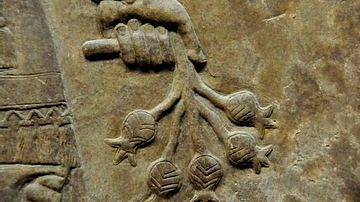
Flowering Branch Held by an Apkallu, Panel 2
Alabaster bas-relief detail showing an Apkallu holding a flowering branch. Neo-Assyrian Period, 865-860 BCE. Detail of Panel 2, Room Z, the North-West Palace at Nimrud, modern-day Iraq. (The British Museum, London)
![Bucket Held by an Apkallu [2]](https://www.worldhistory.org/img/c/p/360x202/7296.jpg?v=1599481805)
Image
Bucket Held by an Apkallu [2]
Alabaster bas-relief detail showing an Apkallu holding a bucket-like object. Neo-Assyrian Period, 865-860 BCE. Detail of Panel 23, Room B, the North-West Palace at Nimrud, modern-day Iraq. (The British Museum, London)
Image
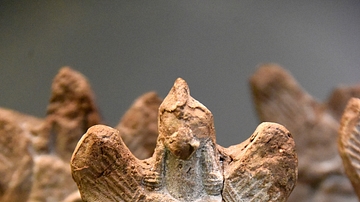
Bird-headed Apkallu for Home Protection
In order to protect the household, these protective figures (apkallu or sage) would be buried beneath the floor in groups of seven. From Nimrud, Northern Mesopotamia, Iraq. Neo-Assyrian Period, 900-612 BCE. (The British Museum, London)
Image
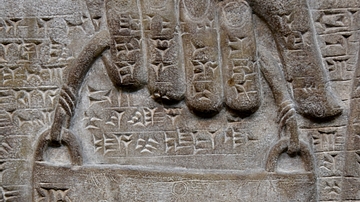
Bucket Held by an Apkallu, Panel 6
Alabaster bas-relief detail showing an Apkallu holding a bucket-like object. Neo-Assyrian Period, 865-860 BCE. Detail of Panel 6, Room G, the North-West Palace at Nimrud, modern-day Iraq. The British Museum, London)
Image
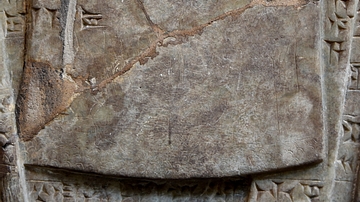
Bucket Held by an Apkallu, Panel 2
Alabaster bas-relief detail showing an Apkallu holding a bucket-like object. Neo-Assyrian Period, 865-860 BCE. Detail of Panel 2, Room G, the North-West Palace at Nimrud, modern-day Iraq. (The British Museum, London)
Image
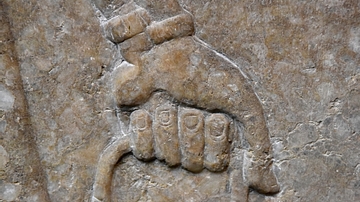
Bucket Held by an Apkallu, Nimrud
Alabaster bas-relief detail showing an Apkallu holding a bucket-like object. Neo-Assyrian Period, 865-860 BCE. Detail of a panel from Room I, the North-West Palace at Nimrud, modern-day Iraq. (The British Museum, London)
Image
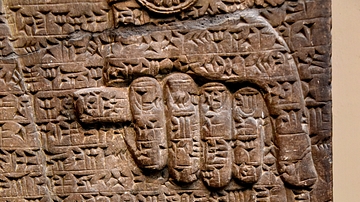
Flowering Branch Held by an Apkallu, Door C
Alabaster bas-relief detail showing an Apkallu holding a flowering branch. Neo-Assyrian Period, 865-860 BCE. Detail of Panel at Door C (number 2), Room S, the North-West Palace at Nimrud, modern-day Iraq. (The British Museum, London)
Image
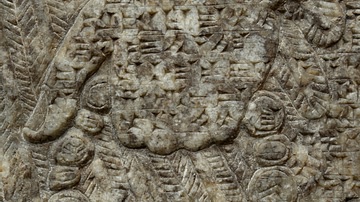
Chaplet Held by an Apkallu
Alabaster bas-relief detail showing an Apkallu holding a chaplet. Neo-Assyrian Period, 865-860 BCE. Detail of Panel 20, Room I, the North-West Palace at Nimrud, modern-day Iraq. (The British Museum, London)
Image
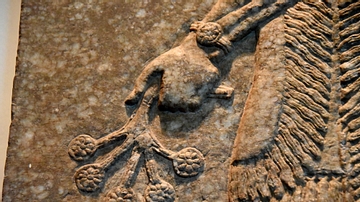
Flowering Branch Held by an Apkallu, Panel 8
Alabaster bas-relief detail showing an Apkallu holding a flowering branch. Neo-Assyrian Period, 865-860 BCE. Detail of Panel 8, Room Z, the North-West Palace at Nimrud, modern-day Iraq. (The British Museum, London)
Image
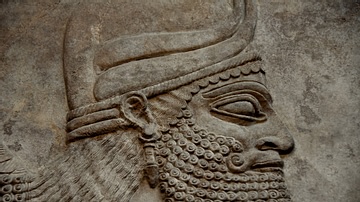
Head of an Apkallu, Panel 6
Alabaster bas-relief detail showing the head of an Apkallu, a protective spirit. Neo-Assyrian Period, 865-860 BCE. Detail of Panel 6, Room G, the North-West Palace at Nimrud, modern-day Iraq. (The British Museum, London)
