
Search
Did you mean: Apollo?
Remove Ads
Advertisement
Search Results
Image
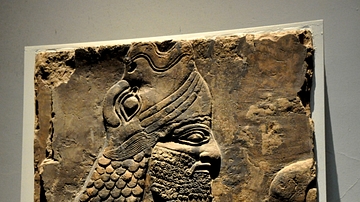
Apkallu wearing a fish cloak
This protective spirit (Apkallu or Abkallu) guarded the entrance to the temple of Ninurta at Nimrud. A fish's head can be seen on Apkallu's head, and its skin hangs down over the back of Apkallu's body. Neo-Assyrian era, 865-860 BCE. From...
Image
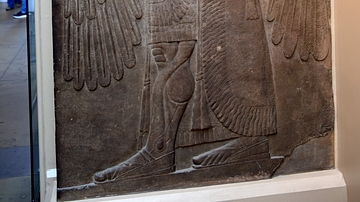
Apkallu with Four Wings
Alabaster bas-relief of an Apkallu with four wings. Neo-Assyrian Period, 865-860 BCE. Panel 26, Room B, the North-West Palace at Nimrud, modern-day Iraq. (The British Museum, London)
Image
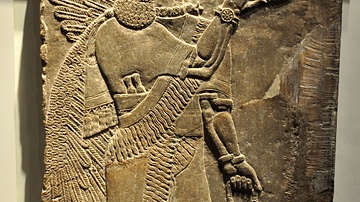
Apkallu from the Temple of Ninurta
This gypsum wall relief depicts an eagle-headed and winged man; this is a protective spirit or Apkallu. He holds a bucket and a cone, and wears an elaborate dress and accessories as well as sandals. Neo-Assyrian Period, reign of Ashurnasirpal...

Image
Apkallu & Lamassu Warding off Evil Spirits
Apkallu and Lamassu from Nimrud, Mesopotamia, modern-day Iraq, 9th century BCE. They ward off evil spirits or demons and protect humans and their place of residence.
The British Museum, London.
Image
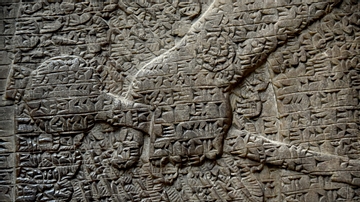
Apkallu Mace
Alabaster bas-relief detail showing the mace of an Apkallu. Neo-Assyrian Period, 865-860 BCE. Detail of Panel 26, Room B (Throne Room), the North-West Palace at Nimrud, modern-day Iraq. (The British Museum, London)
Image
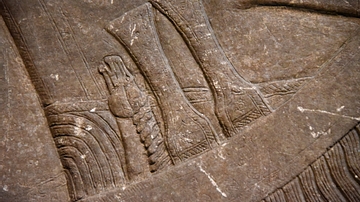
Apkallu's Daggers, Door C
Alabaster bas-relief detail showing the daggers of an Apkallu. Neo-Assyrian Period, 865-860 BCE. Detail of Panel at Door C (number 2), Room S, the North-West Palace at Nimrud, modern-day Iraq. (The British Museum, London)

Image
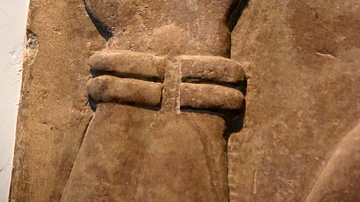
Apkallu's Daggers, Panel 16
Alabaster bas-relief detail showing the daggers of an Apkallu. Neo-Assyrian Period, 865-860 BCE. Detail of Panel 16, Room I, the North-West Palace at Nimrud, modern-day Iraq. (The British Museum, London)
Image
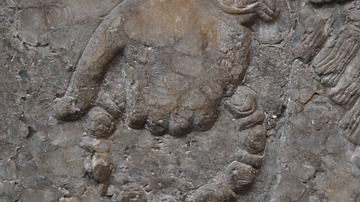
Apkallu's Hand
Alabaster bas-relief detail showing the hand of an Apkallu. Neo-Assyrian Period, 865-860 BCE. Detail of Panel 1, Door A, Room F, the North-West Palace at Nimrud, modern-day Iraq. (The British Museum, London)
Image
Apkallu Chaplet
Alabaster bas-relief detail showing the chaplet of an Apkallu. Detail of Panel 16, Room I, the North-West Palace at Nimrud, modern-day Iraq. (The British Museum, London)
Image
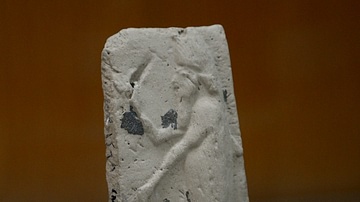
Apkallu plaque
This terracotta plaque depicts an Apkallu. The figure is standing and wears a fish cloak. His right hand is raised and holds a cone while the left hand holds a bucket. Neo-Assyrian period, 911-609 BCE. From Mesopotamia, Iraq. The Sulaymaniyah...
