
Search
Did you mean: Ancient Jordan?
Remove Ads
Advertisement
Search Results
Image
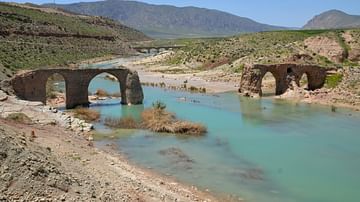
Sasanian Kavar Bridge, Iran
Early Sasanian bridge (Kavar bridge) spanning the Qara Aqaj River near Firuzabad in Iran. It was built in the 3rd century CE, possibly by Romans who were taken captive during the campaigns of Shapur I (r. 240-270 CE).
Image
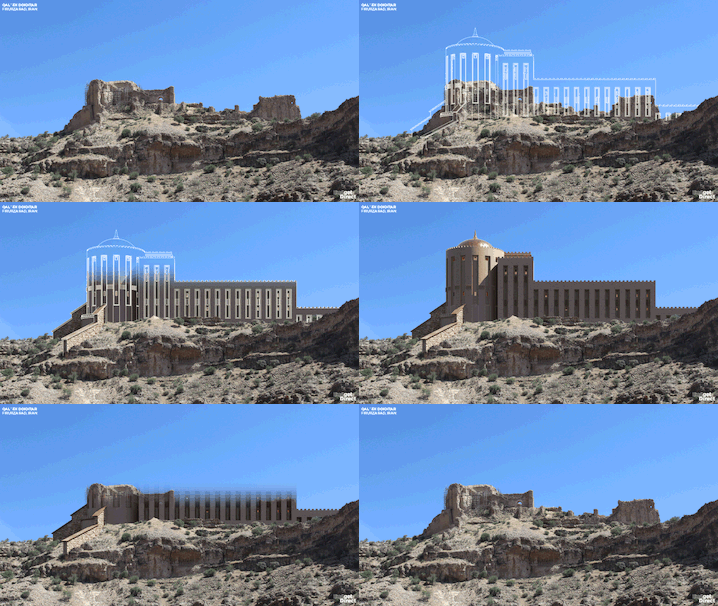
Qal'eh Dokhtar Palace, Fizurabad, Iran - Reconstruction
Qal’eh Dokhar was built by Ardašīr I as a “barrier fortress” during his 3rd century founding of the Sasanian Empire in Iran. The fortress’s third floor housed his royal residence but was eventually...
Image
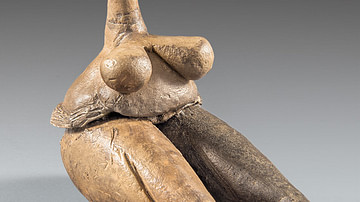
Neolithic Clay Figurine from West Iran
Neolithic clay goddess from Tappah Sarab, Kermanshah, 7000-6100 BCE. Clay figurines of female bodies with exaggerated reproductive organs are among the most common features of prehistoric sculpted art. With...

Image
The Assassins Alamut Castle, Iran
The castle of Alamut, Qazvin, Iran, one-time castle of the Assassins (aka Nizari Ismailis) before their destruction at the hands of the Mongols in the 1250s CE.
Image
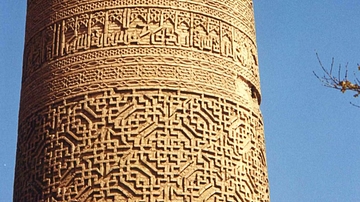
Minaret of Saveh, Iran
The Minaret of the Friday Mosque, Saveh, Iran (1110 CE).

Image
Seven-Bowl Sweetmeat Dish from Iran
Seven-bowl sweetmeat dish from Iran, 13th to 14th century. Sweetmeat dishes are notable for their infrequent presence amongst the vast array of Persian ceramic ware. Their history dates back to at least the Seljuk...

Article
Ten Ancient Persia Facts You Need to Know
Ancient Persian culture exerted a powerful influence throughout the Near East, and beyond, for over a thousand years between c. 550 BCE - 651 CE and many aspects of their culture continued to influence others...

Definition
Shahnameh
The Shahnameh (“Book of Kings”, composed 977-1010 CE) is a medieval epic written by the poet Abolqasem Ferdowsi (l. c. 940-1020 CE) in order to preserve the myths, legends, history, language, and culture of ancient Persia. It is the...

Video
Beneath Iran's Dusty Desert Lie Ancient Water Tunnels Still in Use | National Geographic
Thousands of years ago, Persians created an ingenious system to provide water across their arid landscape. They tapped aquifers at the heads of valleys and designed tunnels...
Image
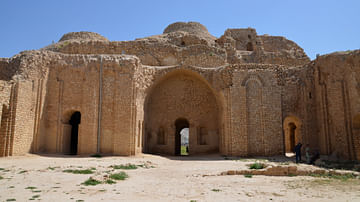
Palace of Ardashir, Iran
The palace of king Ardashir I (r. 224-240 CE), the founder of the Persian Sasanian Empire, was built around 224 CE opposite the city he had founded, Ardashir-Khurrah (“Glory of Ardashir”), on the bank of the western branch...
