
Search
Remove Ads
Advertisement
Search Results

Definition
Fourth Crusade
The Fourth Crusade (1202-1204 CE) was called by Pope Innocent III (r. 1198-1216 CE) to retake Jerusalem from its current Muslim overlords. However, in a bizarre combination of cock-ups, financial constraints, and Venetian trading ambitions...
Image
Byzantine Discussion
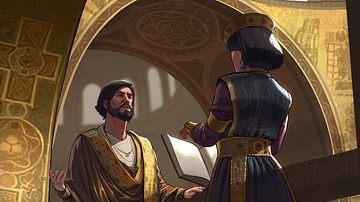
Artist's impression of a discussion between a man and a woman in an ancient Byzantine church. Created by Amplitude Studios for the video game Humankind.

Definition
Mehmed II
Mehmed II (1432-1481 CE), also known as Mehmed the Conqueror, was the seventh and among the greatest sultans of the Ottoman Empire. His conquests consolidated Ottoman rule in Anatolia and the Balkans, and he most famously triumphed in conquering...

Definition
Corpus Juris Civilis - The Justinian Law Code
The Justinian Code or Corpus Juris Civilis (Corpus of Civil Law) was a major reform of Byzantine law created by Emperor Justinian I (r. 527-565 CE) in 528-9 CE. Aiming to clarify and update the old Roman laws, eradicate inconsistencies and...
Image
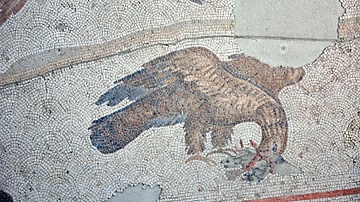
Eagle, Byzantine Mosaic.
Details from the pastoral compositions in the Great Palace mosaics, Istanbul, Turkey. Period: Early Byzantine, circa: 6th century CE. Place: Constantinople, (Modern Istanbul, Turkey). The Great Palace Mosaic Museum was inaugurated in...

Definition
Michael III
Michael III, also known as “Michael the Drunkard” by his detractors, was emperor of the Byzantine Empire from 842 to 867 CE. Never quite escaping the shadow of his mother Theodora, who ruled as regent in his name until c. 855 CE, or his uncle...

Definition
Byzantine Government
The government of the Byzantine Empire was headed and dominated by the emperor, but there were many other important officials who assisted in operating the finances, judiciary, military, and bureaucracy of a huge territory. Without elections...
Image
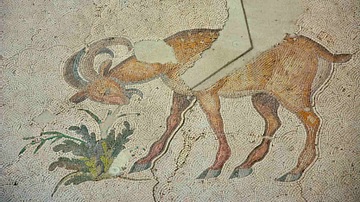
Byzantine Pastoral Mosaic
Detail from the pastoral compositions in the Great Palace mosaics. The Great Palace Mosaic Museum was inaugurated in 1987 CE. The mosaics in the museum mostly depict animals and humans in nature, mythological, pastoral motifs and hunting...

Article
Capitals of the Roman Empire: Constantinople & Rome
Constantinople at first had much in common with the temporary capitals of the 2nd and 3rd century CE and the tetrarchic capitals. It was an existing city of medium size, well located on the road network, and unlike most of them, it was also...
Image
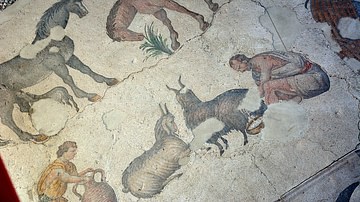
Herdsman Milking a Goat, Byzantine Mosaic
Herdsman milking a goat: An old bearded shepherd is milking his goat and a boy is holding a milk jug. This scene reflects pastoral life. Period: Early Byzantine, circa 6th. century CE. Place: Constantinople, (Modern Istanbul, Turkey). Great...
