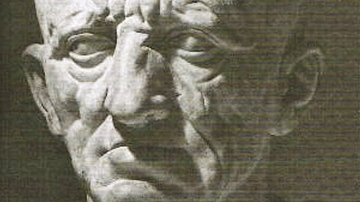
Government in Ancient Rome

Celebrate Our Anniversary with Trivia!

Join us on August 23 for a free virtual trivia party featuring questions about ancient civilizations, U.S. history, unusual historical facts, pop culture, and more.

$281 / $5000
Mark Cartwright
by
published on
bookmark_addbookmark_addedSave Collection

Roman government revolved around the Roman Senate with its body of aristocratic citizens who distinguished themselves from everyone else with their titles, purple-striped togas, senatorial rings and even special shoes. Senators held the key public offices and many would command provinces and armies. Figures such as Julius Caesar and the emperors who followed would diminish the Senate's role, but it would remain an influential body throughout Rome's long history. There were, too, the popular assemblies that enacted legislation and an army of magistrates who enforced it. In addition, courts interpreted the huge body of laws which went back to the Twelve Tables and included countless amendments, cases and imperial edicts.

In this collection, we examine the changing role of the Senate, the fine details of Roman law-making, and some of the key magisterial positions like the aediles and quaestors who controlled every facet of a Roman citizen's civic duties, from paying tax to participating in religious festivals.

During the time of the Republic, these various assemblies were the voice of the citizens of Rome, and although not fully democratic in the modern definition of the word, they allowed at least some portion of the Roman citizenry to be heard. Their essential role in Roman government was crucial enough that the army inscribed on their military standards the letters SPQR - Senatus Populusque Romanus or Senate and Roman people.

Articles & Definitions

Roman Government
Definition

Roman Government

Western Civilization is forever indebted to the people of ancient Greece and Rome. Among the numerous contributions these societies...
Roman Senate
Definition

Roman Senate - Membership, Procedures, & Decline

The Roman Senate functioned as an advisory body to Rome's magistrates and was composed of the city's...
Roman Emperor
Definition

Roman Emperor

Roman emperors ruled the Roman Empire starting with Augustus in 27 BCE and continuing in the West until the late 5th century CE...
Roman Law
Definition

Roman Law

Roman laws covered all facets of daily life. They were concerned with crime and punishment, land and property ownership, commerce...
Twelve Tables
Definition

Twelve Tables

The Twelve Tables (aka Law of the Twelve Tables) was a set of laws inscribed on 12 bronze tablets created in ancient Rome in 451...
Roman Citizenship
Article

Roman Citizenship

Citizenship is and always has been a valued possession of any individual. When one studies the majority of ancient empires one...
Consul
Definition

Consul

In 509 BCE, with the exit of the last Etruscan king, Lucius Tarquinius Superbus, the Roman people were presented with a unique opportunity...
Tribune
Definition

Tribune

Tribune was a title of various offices in ancient Rome, the two most important of which were the tribuni plebis and tribuni militum...
Patrician
Definition

Patrician

The 4th century BCE Greek philosopher Aristotle once wrote in his essay Politics, “If liberty and equality…are chiefly to be found...
Aedile
Definition

Aedile

The aedile was an official of the Roman Republic who maintained Roman roads, supervised the grain and water supply, and provided the city's...
Quaestor
Definition

Quaestor

The quaestor ("the one who asks questions") was the oldest and lowest office on the cursus honorum, or "path of honor" in ancient Rome...
Censor
Definition

Censor - The All-Powerful Magistrate of Ancient Rome

A censor was one of two senior magistrates in the city of ancient Rome who supervised public morals...

Illustrations

3D Models

Questions & Answers

What was the role of Roman government?

The role of Roman government was to discuss and pass laws on all aspects of daily life. The Senate had indirect executive powers while the popular assemblies voted on new laws. Government decided how Romans lived their public and private lives since there was no real distinction between the two.

Why was the Roman government so successful?

Roman government was successful because it shared power between different institutions, officials, and the citizen body. This balance of power meant it was not fully democratic but neither could individuals - even the emperors - ignore the apparatus of government.

What was the most powerful part of government in ancient Rome?

The most powerful part of government in ancient Rome was the two consuls, voted by the popular assembly for one year in office. A consul had supreme executive power, commanding the army, presiding over the Senate, and deciding on new laws to be voted on
Subscribe to this author

About the Author

Free for the World, Supported by You

World History Encyclopedia is a non-profit organization. Please support free history education for millions of learners worldwide for only $5 per month by becoming a member. Thank you!

World History Encyclopedia is a non-profit organization. Please support free history education for millions of learners worldwide for only $5 per month by becoming a member. Thank you!

Become a Member  

Support Us Remove Ads