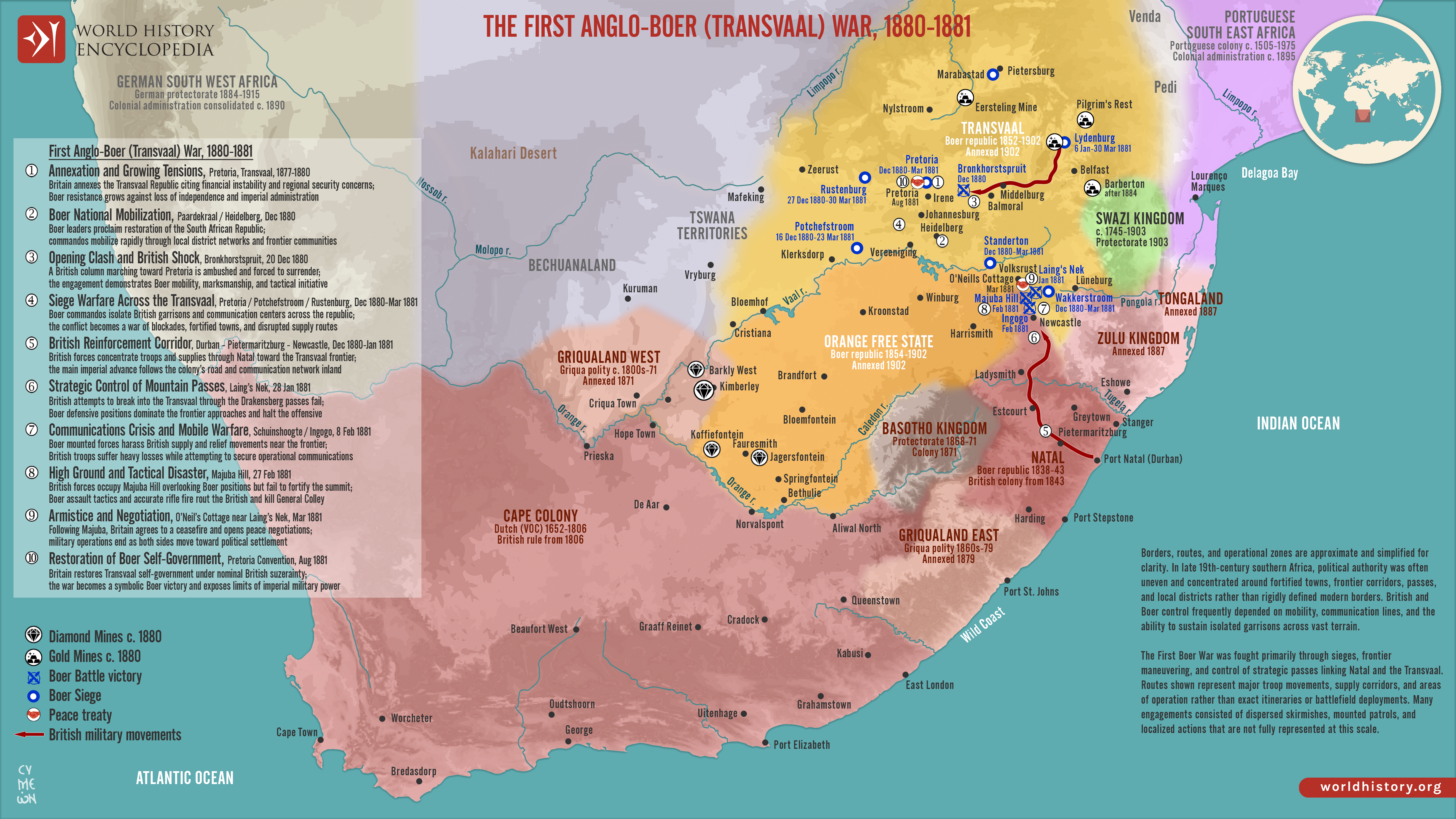
Map of the First Anglo-Boer War, 1880–1881


The First Anglo-Boer War (1880-1881) emerged from growing tensions following the British annexation of the South African Republic (Transvaal) in 1877 during the reign of Victoria (reign 1837-1901). The conflict reflected broader themes of nineteenth-century imperialism, settler identity, and competing claims to political sovereignty in southern Africa. The Boers (from Dutch boer, “farmer”; Dutch-descended settler communities) viewed annexation as a violation of their independence, while British authorities considered control of the Transvaal essential to regional security and imperial strategy. In December 1880, Boer leaders proclaimed the restoration of the republic, transforming a constitutional dispute into an armed conflict.
Despite Britain's global military prestige, the war exposed the challenges of campaigning in unfamiliar terrain against highly mobile opponents. Boer commandos combined local knowledge, marksmanship, and decentralized leadership to achieve a series of victories, culminating in the Battle of Majuba Hill (27 February 1881), where British forces suffered a decisive defeat. The subsequent Pretoria Convention (1881) restored Transvaal self-government under British suzerainty and demonstrated that imperial expansion was neither inevitable nor uncontested. Although brief, the war had lasting consequences, shaping British military thinking and foreshadowing the far larger and more destructive Boer War of 1899–1902.