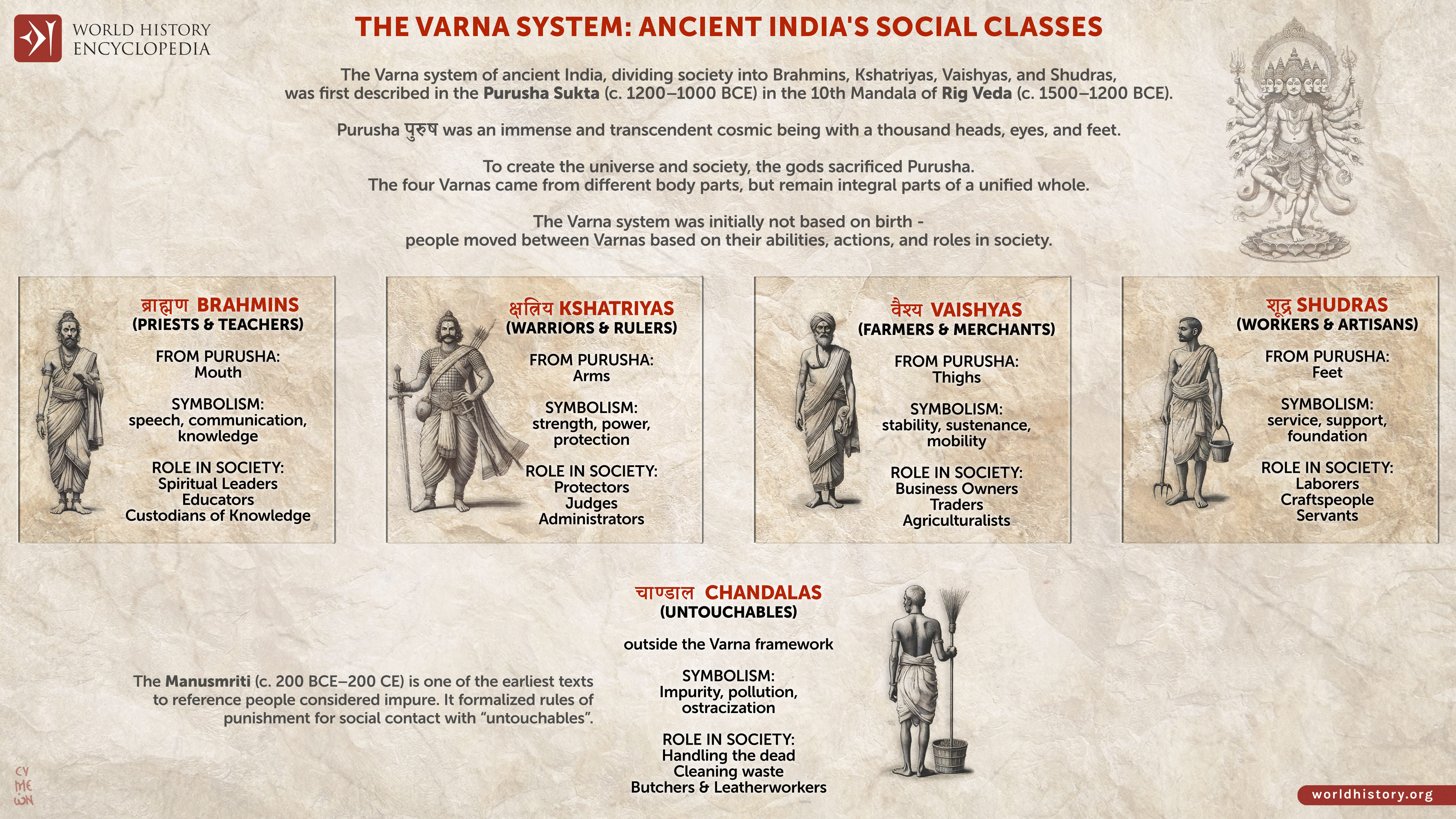
The Four Castes of Ancient India - The Varna System
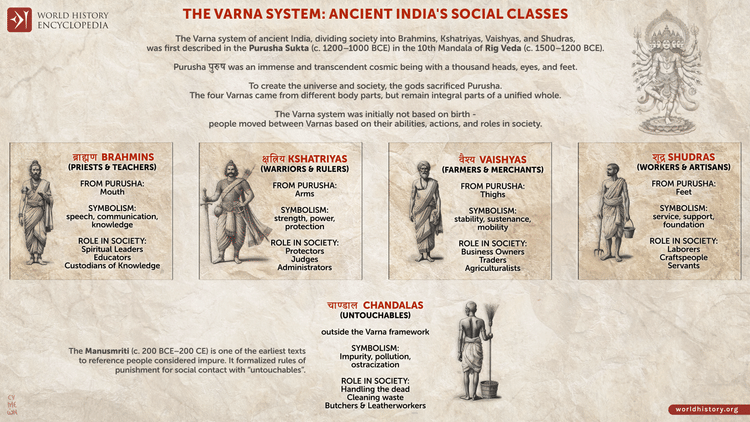
This infographic illustrates the Varna caste system in ancient India. First mentioned in the Rig Veda's Purusha Sukta c. 1200–1000 BCE, it shows society divided into four groups that emerged from the sacrifice of Purusha, a transcendent and immense cosmic being: Brahmins (priests and scholars) from its mouth, Kshatriyas (warriors and rulers) from its arms, Vaishyas (merchants and landowners) from its thighs, and Shudras (laborers and service providers) from its feet. Initially, this system was based on occupation rather than birth. However, it became rigid over time, with varna status inherited. A fifth group, the "Untouchables" (Chandalas), was later added outside of the Varna system, facing severe discrimination and social exclusion.