Architecture in ancient Egypt reflected the Egyptian culture's values, primarily that of ma'at (harmony/balance) symbolized by the symmetry of the completed works. Exteriors and interiors were carefully planned and executed in accordance with the concept of balance, which reflected the order and stability established by the gods and to be honored by the people.
Homes, palaces, temples, shrines, and tombs all followed this same paradigm, which was also reflected in ancient Egyptian art. The Egyptian obelisk, both art and architecture, epitomizes this as these were always raised in pairs and the earthly works were understood as mirrored in the higher realm of the gods, establishing four points of balance between the heavens and earth. The djed symbol, often appearing on ancient Egyptian buildings, stood for this value of stability, and was often paired with the ankh, symbol of life, equating the two concepts.
This gallery presents a sample of the architectural works of the ancient Egyptians along with four of the gods most closely associated with Egyptian architecture and construction: Ptah, god of architecture, and his sometimes-consort, Bastet, who was also patron goddess of hearth and home, and Seshat – goddess of architecture, measurements, and writing – and her consort Thoth, god of writing and wisdom.
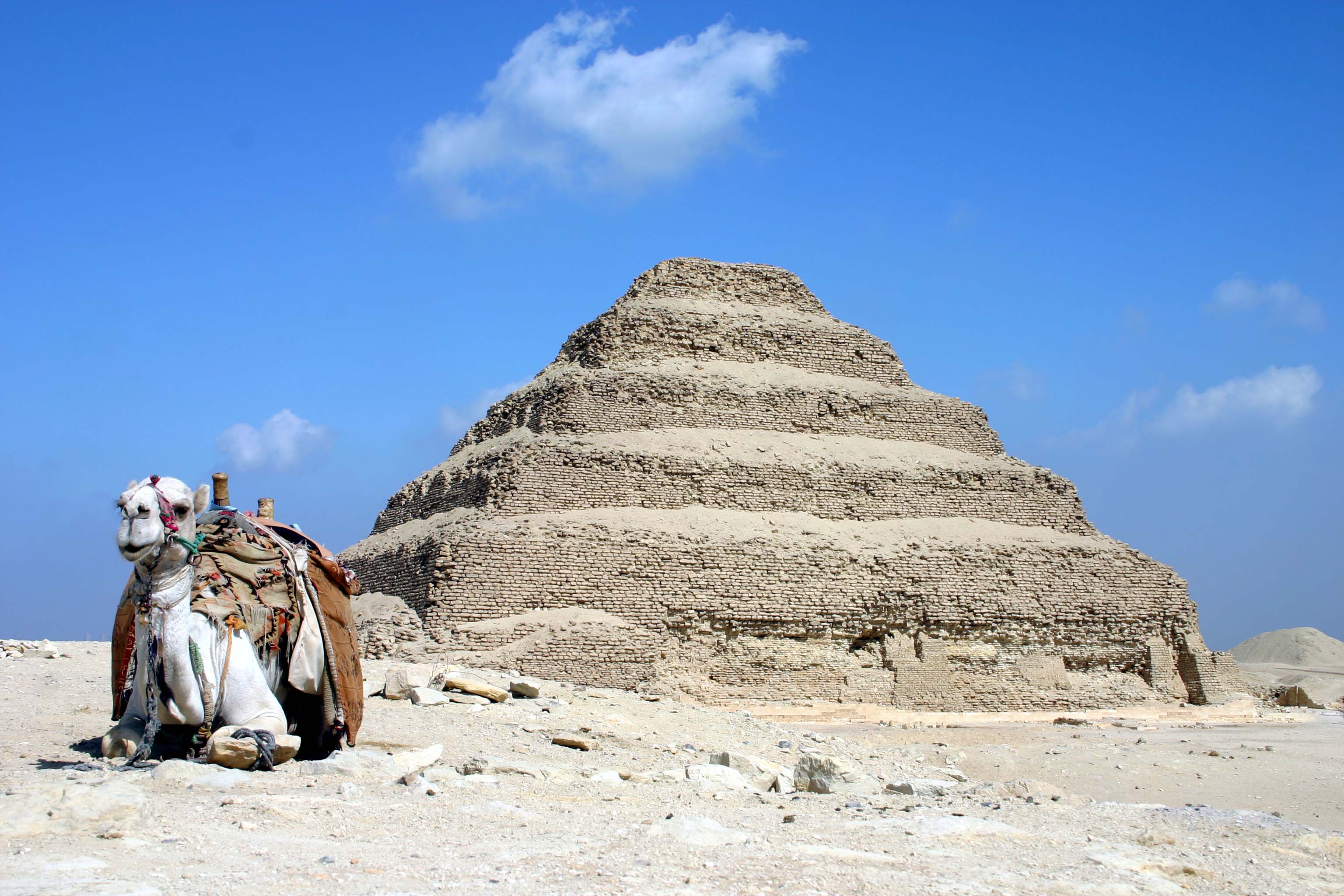
It is the central feature of a vast mortuary complex in an enormous courtyard surrounded by ceremonial structures and decoration. This first Egyptian pyramid consisted of six mastabas (of decreasing size) built atop one another in what were clearly revisions and developments of the original plan. The pyramid originally stood 62 metres (203 ft) tall, with a base of 109 × 125 m (358 × 410 ft), and was clad in polished white limestone.
When did ancient Egyptian architecture begin and end?
Ancient Egyptian architecture developed during the Early Dynastic Period (c. 3150-2613 BCE) and continued through the Ptolemaic Dynasty (323-30 BCE) and then, sporadically, during the Roman Period of Egypt (30 BCE-646 CE).
What is the first pyramid built in Egypt?
The first pyramid built in ancient Egypt is Djoser's Step Pyramid at Saqqara c. 2670 BCE.
What inspired ancient Egyptian architecture?
Ancient Egyptian architecture was inspired and informed by the concept of ma'at (balance, harmony) and stability. Buildings were designed to represent the order established by the gods.
What is the most famous architecture in Egypt?
The Pyramids of Giza and the Great Sphinx are the most famous pieces of architecture from ancient Egypt.
Original image by Charlesjsharp. Uploaded by Jan van der Crabben, published on 26 April 2012. The copyright holder has published this content under the following license: Creative Commons Attribution-ShareAlike. This license lets others remix, tweak, and build upon a work even for commercial reasons, as long as they credit the author and license their new creations under the identical terms. When republishing on the web a hyperlink back to the original content source URL must be included. Please note that content linked from this page may have different licensing terms.