
Search
Did you mean: Thutmose III?

 This answer was generated by
 Search Results

Definition
Thutmose III
Thutmose III (also known as Tuthmosis III, r. 1458-1425 BCE) was the 6th king of Egypt's 18th Dynasty, one of the greatest military leaders in antiquity, and among the most effective and impressive monarchs in Egypt's history. His throne...
Article
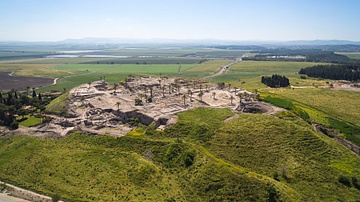
Thutmose III at The Battle of Megiddo
The ancient site of Megiddo was the scene of a number of battles in antiquity and is best known as the source of the word armageddon, the Greek rendering of the Hebrew Har-Megiddo ('Mount of Megiddo') from the biblical Book of Revelation...

Article
Thutmose III's Battle of Megiddo Inscription
The Battle of Megiddo (c. 1457 BCE) is one of the most famous military engagements in history in which Thutmose III (1458-1425 BCE) of Egypt defeated the coalition of subject regions led in rebellion by the kings of Kadesh and Megiddo. The...

Definition
Hatshepsut
Hatshepsut (r. 1479-1458 BCE) was the first female ruler of ancient Egypt to reign as a male with the full authority of pharaoh. Her name means "Foremost of Noble Women" or "She is First Among Noble Women". She began her reign as regent to...

Article
Queen Hatshepsut: Daughter of Amun, Pharaoh of Egypt
Hatshepsut, whose name means "Foremost of Noble Women" or "First Among Noble Women" (royal name, Ma'at-ka-re, translated as "spirit of harmony and truth") was the fifth ruler of the 18th Dynasty (r. 1479-1458 BCE). She was the daughter of...

Article
The Temple of Hatshepsut
Among the duties of any Egyptian monarch was the construction of monumental building projects to honor the gods and preserve the memory of their reigns for eternity. These building projects were not just some grandiose gesture on the part...

Definition
New Kingdom of Egypt
The New Kingdom (c. 1570- c.1069 BCE) is the era in Egyptian history following the disunity of the Second Intermediate Period (c. 1782-1570 BCE) and preceding the dissolution of the central government at the start of the Third Intermediate...
Image
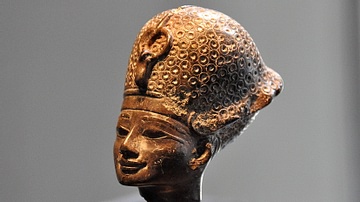
Head of Thutmose IV
Steatite (soapstone) head of the Egyptian pharaoh Thutmose IV. He wears a blue crown. From modern-day Egypt. New Kingdom, 18th Dynasty, 1380 BCE. (State Museum of Egyptian Art, Munich, Germany).
Image
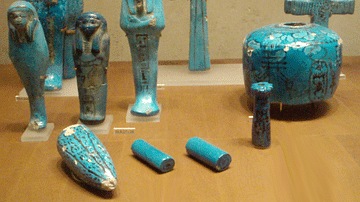
Objects from the Tomb of Thutmose IV
Objects from the tomb of Thutmose IV, 14th century BCE, including amulets in the form of the ankh, the symbol of life or everlasting life. Two large amulets in the shape of an ankh were found among shabti figures and other funerary objects...

Definition
Egyptian Empire
The Egyptian Empire rose during the period of the New Kingdom (c. 1570- c. 1069 BCE), when the country reached its height of wealth, international prestige, and military might. The empire stretched from modern-day Syria in the north to modern-day...
