
Search
Did you mean: Hadrian?
Remove Ads
Advertisement

 This answer was generated by
 Search Results
Image
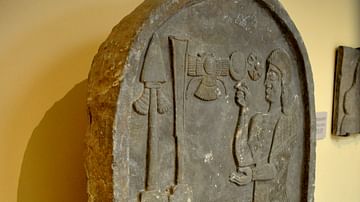
Stele of Bel-harran-beli-usur
Bel-harran-beli-usur was a high palace official (chamberlain) during the reign of the Assyrian kings Shalmaneser IV (782-773 BC) and Tigleth-Pileser III (744-727 BC). He built a city and a large temple to the west of...
Image
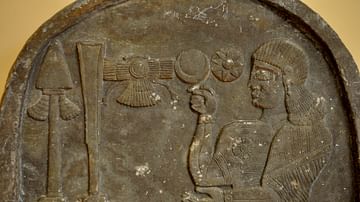
Stele of Bel-harran-beli-usur, close-up
Bel-harran-beli-usur was a high palace official (chamberlain) during the reign of the Assyrian kings Shalmaneser IV (782-773 BC) and Tigleth-Pileser III (744-727 BC). He built a city and a large temple to the...
Image
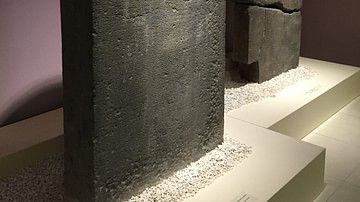
Tablets with King Nabonidus Inscriptions, Harran
These large tablets comes from the 6th-5th century BCE. They contain the inscriptions from King Nabonidus, who was the last king of the Neo-Babylonian Empire, reigning from 556–539 BC. These tablets were...

Definition
Nanna - Mesopotamian God of the Moon and Wisdom
Nanna (also known as Nannar, Nanna-Suen, Sin, Asimbabbar, Namrasit, Inbu) is the Mesopotamian god of the moon and wisdom. He is one of the oldest gods in the Mesopotamian pantheon and is first mentioned...

Definition
Ur - The Great Biblical City Abandoned by the Gods
Ur was a city in the region of Sumer, in southern Mesopotamia, and its ruins lie in what is modern-day Tell el-Muqayyar, Iraq. According to biblical tradition, the city is named after the man who founded...

Definition
Ashurbanipal
Ashurbanipal (r. 668-627 BCE, also known as Assurbanipal) was the last of the great kings of Assyria. His name means "the god Ashur is creator of an heir" and he was the son of King Esarhaddon of the Neo-Assyrian Empire. In the Hebrew...

Article
Lost Civilisations of Anatolia: Göbekli Tepe
Göbekli Tepe is the world's oldest example of monumental architecture; a 'temple' built at the end of the last Ice Age, 12,000 years ago. It was discovered in 1995 CE when, just a short distance from the...
Image
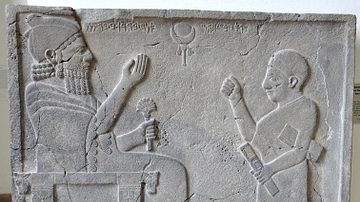
Prince Barrakib
This basalt wall relief depicts Prince Barrakib (Bar-Kib) sitting on a throne. Before him, a scribe stands with a writing tablet beneath his arm. The Aramaic inscription besides his head reads "I'm Barrakib, son of Panammwua"...
