

The cultural landscape and archaeological remains of the Bamiyan Valley in Afghanistan represent the artistic and religious developments which from the 1st to the 13th centuries characterized ancient Bakhtria, integrating various cultural influences into the Gandhara school of Buddhist art. The area contains numerous Buddhist monastic ensembles and sanctuaries, as well as fortified edifices from the Islamic period. Source: UNESCO TV / © NHK Nippon Hoso Kyokai URL: http://whc.unesco.org/en/list/208/
Related Content

Gandhara Civilization

Cultural Links between India & the Greco-Roman World
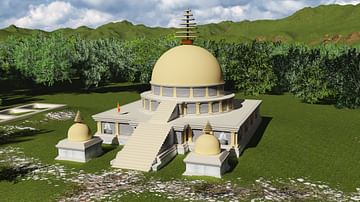
Taxila

Indus Valley Civilization

Valley Forge

A Roman Trail in the Moselle Valley
Cite This Work
APA Style
Kyokai, U. T. N. N. H. (2018, September 13). Cultural Landscape and Archaeological Remains of the Bamiyan Valley (UNESCO/NHK). World History Encyclopedia. https://www.worldhistory.org/video/1469/cultural-landscape-and-archaeological-remains-of-t/
Chicago Style
Kyokai, UNESCO TV NHK Nippon Hoso. "Cultural Landscape and Archaeological Remains of the Bamiyan Valley (UNESCO/NHK)." World History Encyclopedia, September 13, 2018. https://www.worldhistory.org/video/1469/cultural-landscape-and-archaeological-remains-of-t/.
MLA Style
Kyokai, UNESCO TV NHK Nippon Hoso. "Cultural Landscape and Archaeological Remains of the Bamiyan Valley (UNESCO/NHK)." World History Encyclopedia, 13 Sep 2018, https://www.worldhistory.org/video/1469/cultural-landscape-and-archaeological-remains-of-t/.
