
Search Images
Browse Content (p. 999)
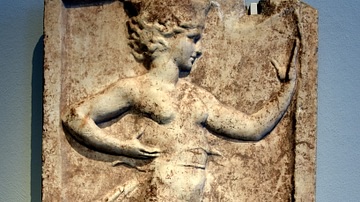
Image
Relief of Kalathiskos Dancer
This is a Neo-Attic relief of the so-called "kalathiskos dancer". The relief shows a dancing woman in waving robes and with a basket-like headdress (kalathiskos). Stylistically, the relief can be attributed to the so-called...
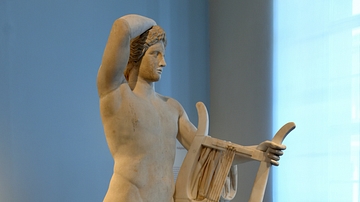
Image
Statue of Apollo Lykeios
The head and body of two different Roman copies were combined in the 18th century CE. The god appears in the so-called "Lykeios type", with the right forearm resting across his head. The model was either an original, created...
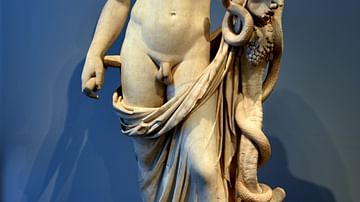
Image
Colossal Statue of Antinous
The head and the statue are ancient but were combined as recently as the 18th century. The portrait depicts the Roman Emperor Hadrian's lover, Antinous, depicted with a snake and cornucopia. The attributes allow the statue...
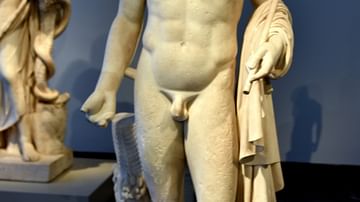
Image
Antinous as Omphalos Apollo
This torso, amended to resemble the statue of the Capitoline Antinous in Rome, belongs to a series of ancient copies of the so-called "Omphalos Apollo". This famous Greek original from around 460 BCE is preserved in several...
Image
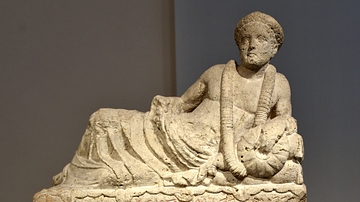
Cinerary Urn Portraying the Murder of Troilus
The upper part shows a reclining man with a kantharos. On the left side of the urn's front is depicted the murder of the Trojan prince Troilus by Achilles, and on the right, there is an attacking fury with...
Image
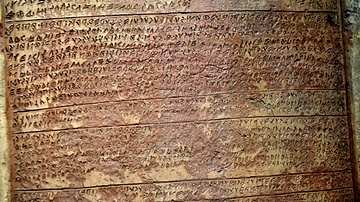
Etruscan Inscription
This is a detail of a large Etruscan ritual calander from Santa Maria Capua Vetere, Italy. The Etruscan language is preserved in about 10,000 short texts; the grave, votive, and ownership inscriptions. Only four longer texts...
Image
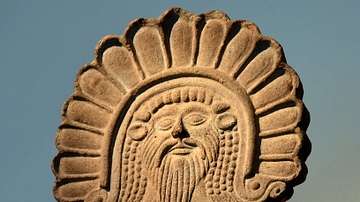
Antefix Depicting Achelous
This leaf wreath antefix shows the head of Achelous. Achelous was the god of water and rivers of the whole world. Clay. From Curti, near Capua, Italy. Etruscan, 480-460 BCE. It is on display at the Altes Museum in Berlin...
Image
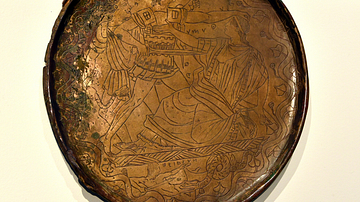
Orestes Kills Clytemnestra
On this bronze mirror, a scene is carved. It depicts the killing of Clytemnestra by her son, Orestes. Engraved around 440 BCE. Acquired in 1843 CE. It is on display at the Altes Museum in Berlin, Germany.
Image
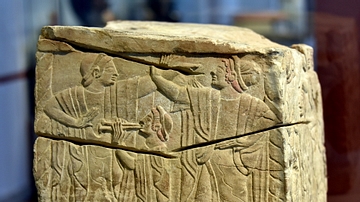
Dancing Girls & Young Men on Cippus
Square-shaped cippi were found inside burial chambers and carried an egg-shaped top, possibly as a symbol of life and fertility. The scenes depicted in bas-reliefs are connected with cult of the dead and burial...
Image
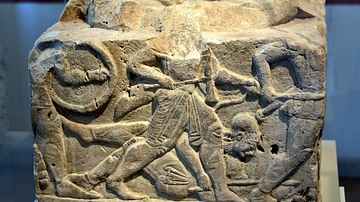
Base of a Cippus Showing Greeks & Amazons
The base is surrounded by a frieze of Greeks and Amazons, yet without fighting action. Possibly, this early Etruscan "Amazonomachy" is a game or a parade within the context of the death cult. The Amazons' clothing...
