
Search Images
Browse Content (p. 654)

Image
Map of the European Colonization of North America, 1492-1750
The systematic European colonization of North America unfolded between the first voyages of the 1490s and the outbreak of the French and Indian War in the 1750s. Spanish, French, English, and Dutch ambitions carved up the continent, with...
Image
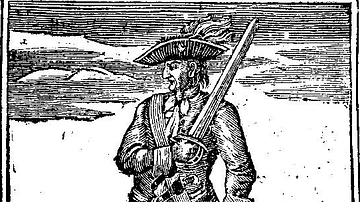
John Rackham ('Calico Jack')
An early 18th-century print of the English pirate John Rackham, otherwise known as 'Calico Jack' (d. 1720). The illustration appeared in an early edition of A General History of the Robberies and Murders of the Most Notorious Pyrates by Captain...

Image
Toby Schmitz as John Rackham
Toby Schmitz as the English pirate John Rackham, aka 'Calico Jack' (d. 1720) in the TV series Black Sails.
©2017 Starz Entertainment
Image
Pirate with Telescope
An image of a pirate using a telescope from the TV series Black Sails. The actor is Graham Hopkins.
© 2014 Starz
Image
Pirate Crew from Black Sails
An image of a pirate crew from the TV series Black Sails.
© 2014 Starz
Image
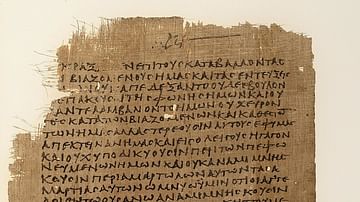
The Book of Enoch Manuscript
The backside of P.Mich.inv. 5552, showing portions of the Book of Enoch in Greek. Part of the Chester Beatty Papyri, most likely originated in Egypt, 4th century CE.
University of Michigan, Ann Arbor Library

Image
Tom Hopper as Billy Bones
Tom Hopper as the fictional pirate William "Billy Bones" Manderly in the TV series Black Sails. Billy Jones is a character in Robert Louis Stevenson's 1883 novel Treasure Island.
© 2014 Starz

Image
Capture of the Galleon by Howard Pyle
Capture of the Galleon' by Howard Pyle, an illustration which first appeared in Buccaneers and Marooners of the Spanish Main in an 1887 edition of Harper's Magazine.
Image
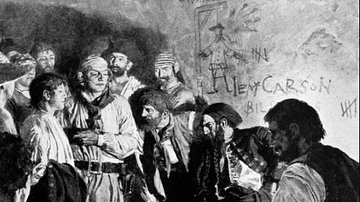
Pirates on Shore by Howard Pyle
He Led Jack up to a Man Who Sat upon a Barrel' by Howard Pyle, an illustration for a 1921 edition of Jack Ballister's Fortunes by Howard Pyle and Merle De Vore (ed).
Image
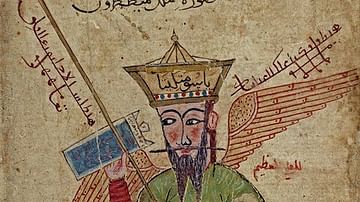
Metatron
The angel Metatron as depicted in the Daqa’iq al-Haqa’iq by 14th-century Islamic artist Nasir al-Din Rammal. Metatron appears in Kabbalistic mystical texts and was considered to be the highest of angels closest to God. In Jewish apocryphal...
