
Search Images
Browse Content (p. 280)
Image
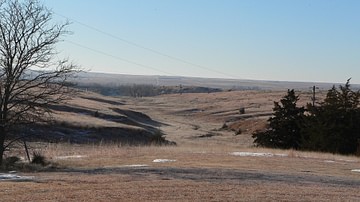
View of Massacre Canyon
The view looking southwest from the Massacre Canyon monument, on the south side of US Highway 34 northeast of Trenton, Nebraska. The site is infamous for the Battle of Massacre Canyon of 1873 when a Sioux coalition attacked and killed a Pawnee...

Image
Sioux Chief Two Strike
Sioux Chief Two Strike (l. c. 1831-1915) of the Brule band of Lakota Sioux.

Image
Map of The D-Day and the Normandy Landings, June 1944 - Operation Overlord & History's Largest Amphibious Invasion
The Allied landings in Normandy on 6 June 1944, commonly known as D-Day, marked one of the most significant operations of the Second World War (1939-1945) and the largest amphibious invasion in military history. As the opening phase of Operation...
Image
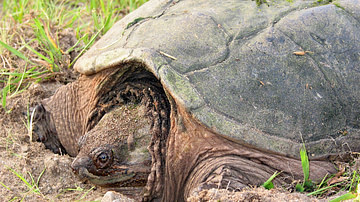
North American Snapping Turtle
North American female snapping turtle.

Image
North American Box Turtle
North American Box Turtle (Eastern Box Turtle).
Image
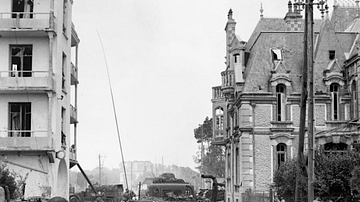
British Troops off Sword Beach
A photograph showing British troops moving inland off Sword Beach after the D-Day Normandy Landings of 6 June 1944. The town is La Brèche d'Hermanville. (Imperial War Museums)
Image
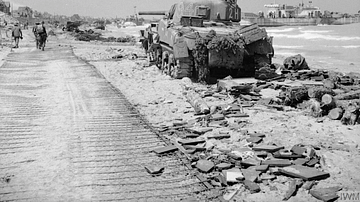
Abandoned Tank, Sword Beach
A photograph of an abandoned British flail tank on Sword Beach during the D-Day Normandy Landings of 6 June 1944. (Imperial War Museums)

Image
Pegasus Bridge, Normandy Landings
A photograph of Pegasus Bridge on the Caen Canal after its capture on D-Day 6 June 1944 by British paratroopers. Control of the bridge was vital to the eastern flank of the Allied Normandy Landings, preventing German panzer divisions from...
Image
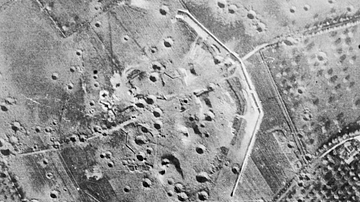
Bombardment of the Merville Battery
A photograph showing the crater damage inflicted by RAF Lancaster bombers on the German Merville battery on the Orne estuary. The four guns of Merville (believed bigger than they actually were by the Allies) threatened Sword Beach of the...

Image
British Commandos, Sword Beach
A photograph showing British commandos of the 1st Special Service Brigade attacking Sword Beach on D-Day 6 June 1944. The brigade was led by Lord Lovat (seen in the photo on the right of the column wading in the sea). (Imperial War Museums)
