
Search Images
Browse Content (p. 1943)
Image
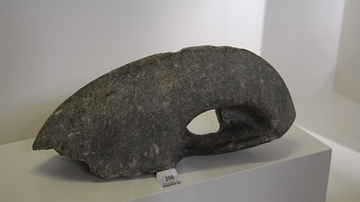
Stone Halter
A jumping weight carried by athletes in each hand in the long jump event to gain distance (date unknown). Olympia Archaeological Museum.
Image
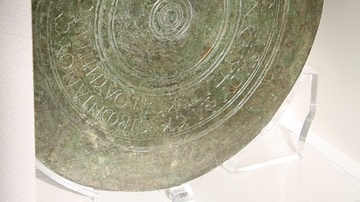
Bronze Discus
An inscribed bronze discus from Olympia dedicated by Publius Asklepiades (After 241 CE). Olympia Archaeological Museum.

Image
Athens Acropolis
The Acropolis of Athens. Dominating the acropolis is the Parthenon, built between 447 and 432 BCE in the Age of Pericles, and dedicated to the city’s patron deity Athena.
Image
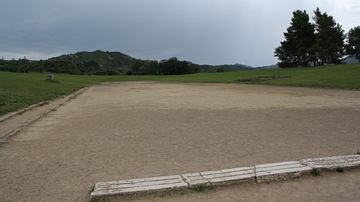
Stadium of Olympia
The stadium of Olympia (present form: 5th century BCE) with the starting line. The capacity at its maximum was 45,000.

Image
Starting Blocks, Olympia
The starting line of the stadium in Olympia (4th century BCE). Athletes had to place their toes in the front grooves on the block.

Image
The Zanes, Olympia
Stone bases of the Zanes of Olympia. These statues of Zeus were funded from fines from offending athletes in the Games. (4th century BCE).

Image
Stadium Entrance, Olympia
The Krypte, which was the official entrance to the stadium of Olympia (200 BCE).
Image
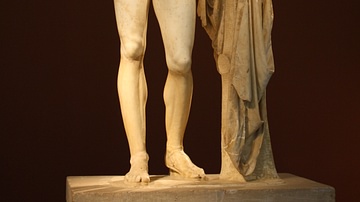
Hermes
The Hermes of Praxiteles, from the temple of Hera, Olympia (340-330 BCE). The infant is Dionysos. Olympia Archaeological Museum.
Image
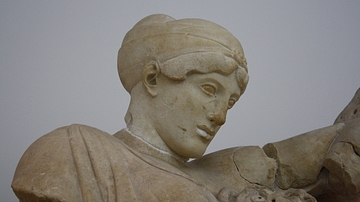
Deidameia
Marble statue of Deidameia in the severe style, from the west pediment of the temple of Zeus, Olympia (c. 460 BCE). Olympia Archaeological Museum.

Image
West Pediment, Temple of Zeus, Olympia
The west pediment of the temple of Zeus at Olympia representing the battle between the Lapiths and the Centaurs in Thessaly. Symbolic of the greek victory over barbarians or reason over savage nature. Severe...
