
Search Images
Browse Content (p. 1876)
Image
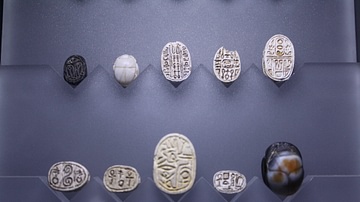
Egyptian Scarab Amulets
Egyptian scarab amulets from the Middle Kingdom and Second Intermediate Period, 2040-1550 BCE. (Capitoline Museums, Rome).
Image
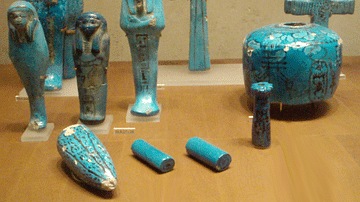
Objects from the Tomb of Thutmose IV
Objects from the tomb of Thutmose IV, 14th century BCE, including amulets in the form of the ankh, the symbol of life or everlasting life. Two large amulets in the shape of an ankh were found among shabti figures...

Image
Scarab
Scarab shaped amulet containing the image and cartouche of Amenhotep III, promising its owner in this world 'life' (represented by an ankh). These beetle amulets were used in Ancient Egypt for rituals or administrative purposes (14th...

Image
The Trojan Horse
A scene from the end of the Trojan War. The Greeks, to infiltrate the city, had taken the advice of Odysseus and tricked the Trojans into believing the Greek forces had left Troy. Leaving behind the offering of a massive horse...

Image
Roman Victory Procession
Artist's impression of a victory procession. This 3D render nicely displays how Roman soldiers have looked, and how their victories were celebrated.

Image
Carthage and its Harbour
This is a 3D rendition of what Carthage might have looked like at the height of its power. In the foreground you can see the Cothon, the city's famous military harbour.

Image
Ancient Naval Battle
This is a 3D rendition of how an ancient ship ramming an enemy vessel may have looked.

Image
Leonidas
A 5th century BCE marble figure of a Spartan hoplite, perhaps of Leonidas in memory of his sacrifice at the Battle of Thermopylae in 480 BCE. (Archaeological Museum of Sparta, Greece).

Image
Roman Shop Fronts, Ostia
A row of shop fronts (botteghe) on via dei Balconi, in the Roman port town of Ostia, late 1st-early 2nd century CE.
Image
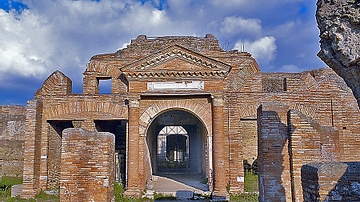
Horrea Epagathiana, Ostia
The main entrance of the 2nd century CE Horrea Epagathiana, Ostia. Horrea were used to store huge quantities of foodstuffs such as grain, however, the large number of locks found at the site suggest this particular building...
