
Search Images
Browse Content (p. 1846)
Image
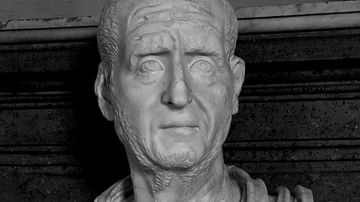
Decius
A portrait sculpture of Roman emperor Decius, r. 249-251 CE. (Capitoline Museums, Rome)

Image
Lamassu from Ashurnasirpal II Palace
This is a pair of guardian figures (winged human-headed lions) that flanked one of the entrances into the throne room of Ashurnasirpal II (883-859 BCE). Stone mythological guardians, sculpted in relief or in the...
Image
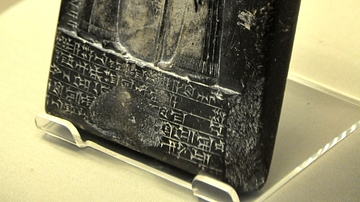
Stone tablet of Nabu-apla-iddina
This stone tablet records the restoration of certain lands by the Babylonian king Nabu-apla-iddina to a priest. On the top of the stone are 13 symbols of the gods designed to protect the legal statement. Both the...

Image
Megalithic Model From Malta
Model of a Megalithic building carved out of Globigerina Limestone. It shows a trilithon entrance and walls formed of slabs. Above these are one or two courses of horizontally laid slabs projecting inwards. The roof is...

Image
Portland Vase [Reverse Detail]
A detail from the celebrated Portland Vase, one of the finest examples of Roman glassware. The vase was made during the reign of Augustus (27 BCE - 14 CE) and displays gemcutting techniques used to create a cameo-like...

Image
Portland Vase [Detail]
A detail form the celebrated Portland vase, one of the finest examples of Roman glassware. The vase was made during the reign of Augustus (27 BCE - 14 CE) and displays gemcutting techniques used to create a cameo-like depiction...

Image
Head of Lamassu from Ashurnasirpal II palace
A close-up view of a winged human-headed lion, Lamassu, that flanked one of the entrances into the throne room of Ashurnasirpal II (883-859 BCE). Nimrud (ancient Kalhu), north-west palace, room B, door a...

Image
Sima Qian
Painted portrait of Sima Qian (c. 145-86 BCE). Although he is commonly referred to as a Chinese historian, he was actually the Grand Astrologer at the court of Emperor Wu of Han (r. 141 and 87 BCE).

Image
Aztec Ceremonial Knife
An Aztec ceremonial knife with a cedarwood handle and flint blade. The figure of the handle is covered in turquoise and shell mosiac and represents an Aztec Eagle knight. 1400-1521 CE. (British Museum, London)

Image
Map of the World from Sippar, Mesopotamia
This tablet contains both a cuneiform inscription and a unique map of the Mesopotamian world. Babylon is shown in the center (the rectangle in the top half of the circle), and Assyria, Elam and other places...
