
Search Images
Browse Content (p. 1833)

Image
Map of the World from Sippar, Mesopotamia
This tablet contains both a cuneiform inscription and a unique map of the Mesopotamian world. Babylon is shown in the center (the rectangle in the top half of the circle), and Assyria, Elam and other places...

Image
Lion-Hunting Scene, King Ashurbanipal
Sculpted relief illustrating the sporting exploits of the last great Assyrian king, Ashurbanipal, North Palace, room C, panel 20-22, Nineveh, modern-day northern Iraq. Neo-Assyrian Empire, reign of King Ashurbanipal...
Image
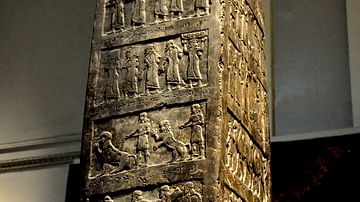
The Black Obelisk of King Shalmaneser III
This obelisk was erected as a public monument in 825 BCE at a time of civil war. The relief sculptures glorify the achievements of King Shalmaneser III and his commander-in-chief . It lists their military campaigns...

Image
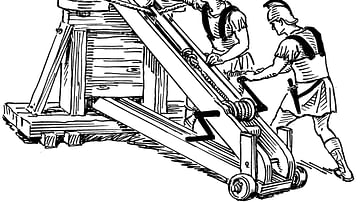
Roman Artillery Attack
An image illustrating what a Roman artillery attack might have looked like. Centre is a ballista arrow-throwing device, in use between the 3rd century BCE and 4th century CE in Roman warfare.
Image
Roman Stone-throwing Carroballista
The carroballista was a Roman artillery weapon which used torsion to propel bolts or stones over several hundred metres. They were in use from the 3rd century BCE to the 4th century CE.

Image
Roman Ballista Reconstruction
The ballista was a Roman artillery weapon which used torsion to propel bolts or stones over several hundred metres. They were in use from the 3rd century BCE to the 4th century CE. This reconstruction is from the Hecht...

Image
Roman Ballista
The ballista was a Roman artillery weapon which used torsion to propel bolts or stones over several hundred metres. They were in use from the 3rd century BCE to the 4th century CE.

Image
Egyptian sphinx from Diocletian's Palace
Diocletian's Palace was decorated with numerous granite sphinxes originating from the site of Egyptian Pharaoh Thutmose III. Only three have survived the centuries. This one is still located on the Peristyle...

Image
Sumerian Votive Plaque
A votive plaque of white marble. The lower part shows two men carrying a large jar (probably filled with beer) and another man in front of them seems to steer an animal from behind, perhaps a cow or horse. At the upper part...

Image
Basement halls of Diocletian's Palace
The basement halls of Diocletian's Palace were originally the supporting structures of the Roman emperor's residential quarters. They reflect the layout of the upper floor halls. Diocletian's Palace (Split, Croatia...
