
Search Images
Browse Content (p. 1463)
Image
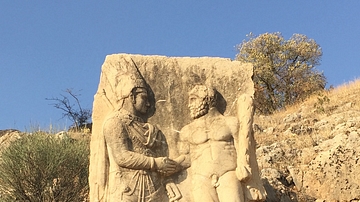
Apollo-Mithras Meets Antiochus I
Found in the ancient ruins of Arsameia, outside Kahta, Turkey, 15 km from the world heritage site of Nemrut Dagi, this stele portrays the meeting of Antiochus I (r. 70 BCE - c. 38 BCE) and Apollo. Antiochus - the ruler of the Commagene kingdom...
Image
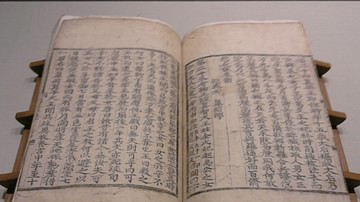
Samguk Yusa
A copy of the Samguk Yusa ('Memorabilia of the Three Kingdoms') by Iryeon, a 13th century CE text which covers the history and legends of Korea's founding right up to the 10th century CE. (Seoul National University Kyujanggak Institute for...
Image
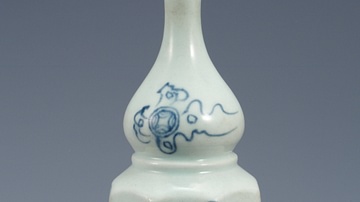
Korean White Porcelain Bottle
A bottle made from the white porcelain manufactured during the Joseon dynasty (1392-1910 CE) of Korea. The design has an auspicious character and orchids. (National Museum of Korea, Seoul, South Korea)
Image
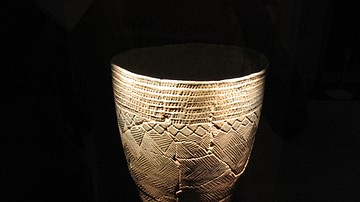
Korean Neolithic Pot
A typical pottery bowl from the Korean Neolithic period with pointed base and simple incised decoration. (National Museum of Korea, Seoul, South Korea)
Image
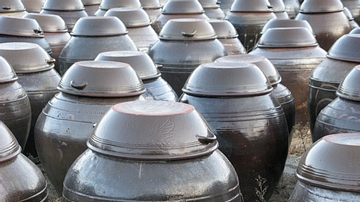
Korean Onggi Jars
Korean onggi lidded-jars, made since ancient times they are used for a multitude of purposes and carry simple decoration.
Image
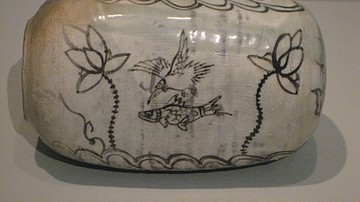
Korean Buncheong Bottle
A buncheong (punchong) bottle decorated with lotus flowers, a bird and fish. Joseon Dynasty, Korea, 15th-16th century CE. (Museum of Oriental Ceramics, Osaka, Japan)

Image
Dragon-Turtle Celadon
A celadon (greenware) ceramic kettle in the form of a mythical dragon-turtle creature. Korea, Goryeo dynasty, 918-1392.
National Museum of Korea, Seoul.
Image
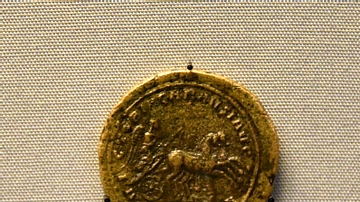
Medallion of Carausius
The rebel Carausius (Marcus Aurelius Mausaeus Valerius Carausius) declared himself emperor, making Britain his base. Although he had no authority in Rome, he stressed his Roman identity by citing the poet Virgil on his coins. He also used...
Image
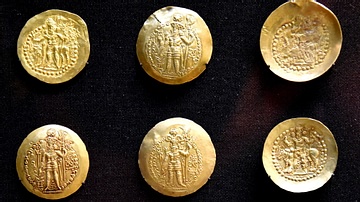
Gold Coins
Gold coins of the Sassanian, Kushanshah, and Kidarite Dynasties. 309-380 CE. From the Burnes, Cunningham, Hay, Parkes Weber, and Prinsep Collections. The British Museum, London.
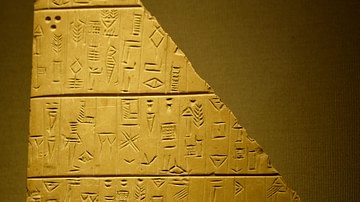
Image
Mesopotamian Tablet with Puchase Details from Dilbat
This tablet lists purchases of land by a man named Tupsikka, with payments made in baskets of barley. One transaction reads "The price of the field is 90 gur-sag-gal 16 quarts of oil". Stone tablet, about 2400-2200 BCE. Excavated by Hormuzd...
