
Search Images
Browse Content (p. 1174)
Image
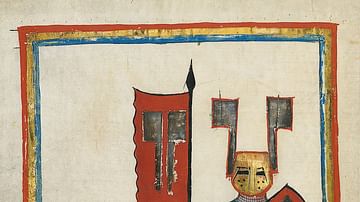
Wolfram von Eschenbach & His Squire
A medieval illustration of the Germanic knight Wolfram von Eschenbach and his squire. 1305-1315 CE. (Codex Manesse, Zurich, Switzerland)

Image
King David I Knighting a Squire
A medieval illustration of King David I of Scotland (r. 1124-1153 CE) knighting a squire.
Image
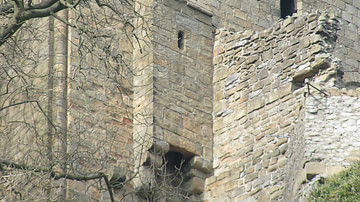
Garderobe, Peveril Castle
A garderobe or toilet of the tower keep at Peveril Castle, Derbyshire, England. Late 12th century CE.

Image
Toilet, Tower of London
A typical medieval toilet or garderobe. Tower of London. 11th century CE.
Image
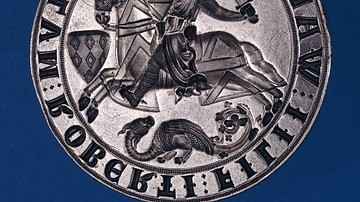
English Medieval Knight
A silver seal of Robert Fitzwalter showing a mounted knight. 1213-1219 CE. Diameter: 73 mm. (British Museum, London)
Image
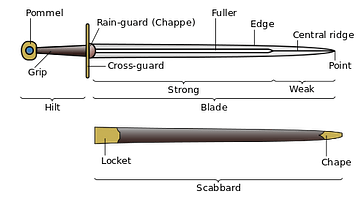
Elements of a Medieval Great Sword
A diagram illustrating the various components of a medieval Great Sword and scabbard, the typical weapon of knights.

Image
Medieval Great Sword
A medieval Great Sword, c. 1400 CE. This weapon was the typical weapon of a European knight. L. 40 1/4 in. (102.2 cm); L. of blade 32 in. (81.3 cm); Wt. 3 lb. 11 oz. (1673 g). (Metropolitan Museum of Art, New York)

Image
Decebalus
Rock Sculpture of Dacian King Decebalus (c. 87-106 CE). Iron Gates, Romania.
Image
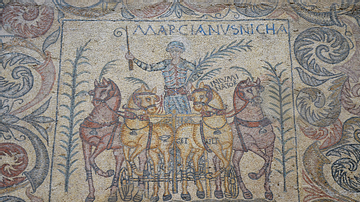
Victorious Roman Charioteer
Roman mosaic depicting a victorious charioteer called Marcianus, accompanied by the wish of victory NICHA (sic). Nika is a given name of Greek origin meaning "Victory" (Latinized as Nica). Marcianus' lead horse is named as Inluminator and...
Image
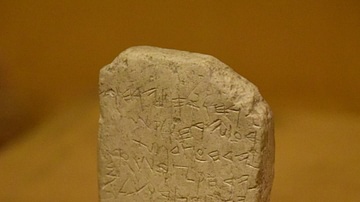
The Gezer Calendar
The Gezer calendar is regarded as the oldest Hebrew inscription as yet known. The inscription is scratched on a tablet of soft, chalky limestone and its lower part is broken and lost. The oblique fracture passes as square thought to have...
