
Search
Did you mean: Pandora?
Remove Ads
Advertisement

 This answer was generated by
 Search Results
Image
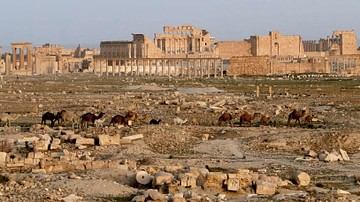
Palmyra
View of Palmyra with the Temple of Bel, Syria. Palmyra (Aramaic: ܬܕܡܘܪܬܐ;Hebrew: תדמור; tiḏmor, Greek: Παλμύρα, Arabic: تدمر; Tadmur, /ˌpælˈmaɪərə/) was an ancient city in central Syria. In antiquity, it was an important city located...
Image
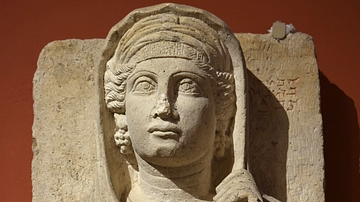
Palmyra Grave Stele
A sandstone grave stelw from Palmyra, Syria. Known as the grave stele of Abkha, daughter of Akhou. 2nd century CE. (Pushkin Museum, Moscow)
Image
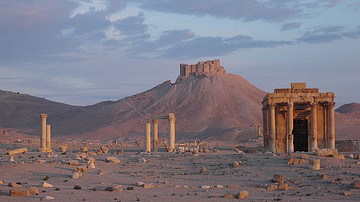
Palmyra Castle
Photo of Palmyra's 13th century CE Mamluk castle with ancient ruins in the foreground.

Image
Palmyra, Syria
Colonnade with canal in the foreground, temple of Ba'al (1st-2nd century CE), Palmyra, Syria.

Definition
Zenobia
Zenobia (b. c. 240 CE, death date unknown) was the queen of the Palmyrene Empire who challenged the authority of Rome during the latter part of the period of Roman history known as The Crisis of the Third Century (235-284 CE also known...
Image
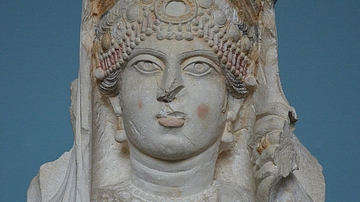
The Beauty of Palmyra Relief
Limestone funerary bust of a woman from Palmyra (Central Syria) with traces of polychromy so called ”The Beauty of Palmyra”, 190-210 CE. (Ny Carlsberg Glyptotek, Copenhagen)
Image
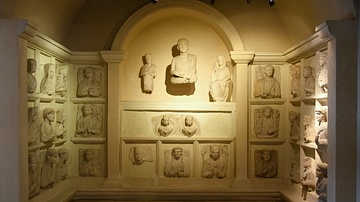
Subterranean Tomb from Palmyra
The hypogea or underground tombs, along with the tower tombs and house tombs, constitute an important part of the monumental burials of the wealthy Palmyrene class in the first and second centuries CE. The underground...
Image
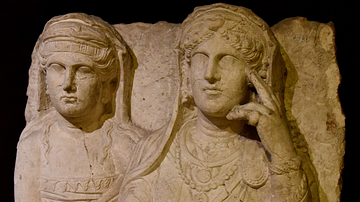
Funerary Relief from Palmyra of a Woman and Daughter
This relief depicts an older woman with her daughter. They are set in a line, represented frontally, stiff, and lifeless. Both of them wear turbans and headbands. At their temples, long strands of...
Image
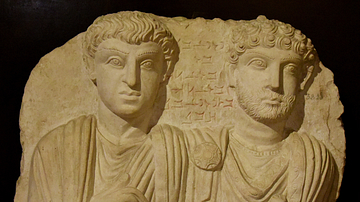
Funerary Relief from Palmyra of a Man and his Son
The inscription on this funerary relief says that the two figures are "Yedi Bel" and his son "Zabde'atach". Limestone. Roman Period, 200-273 CE. From Palmyra, in modern-day Syria. (Museum of Archaeology...

Image
Hadrian Arriving in Palmyra
An illustration of the Roman emperor Hadrian (r. 117-138 CE) arriving in Palmyra, by Marek Szyszko. (Courtesy of Ancient History Magazine / Karwansaray Publishers)
