


Stone slabs assembled in a cubiform manner in "Piano della Fiera", Butera, Sicily, similar to those found in Sardinia and dated to the copper age (c. 3000-2100 BCE). It was reused by the Greeks and indicates mixed cult practices, both Hellenic and indigenous, characterised by the positioning of human remains inside urns (gr. enchytrismòs, the most frequent mode of burial for infants in vases), which in turn, were placed inside this small chamber.
About the Author
Related Images
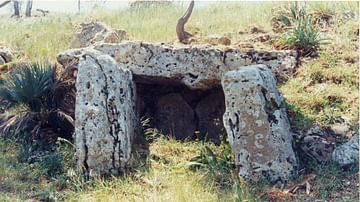
Monte Bubbonia Dolmen, Sicily
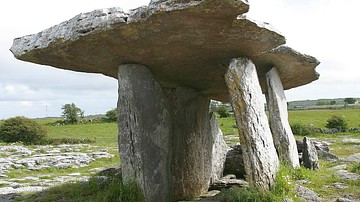
Poulnabrone Dolmen

Kermario Dolmen, Carnac
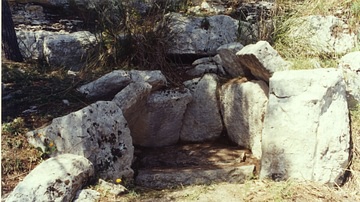
The Dolmen of Cava dei Servi
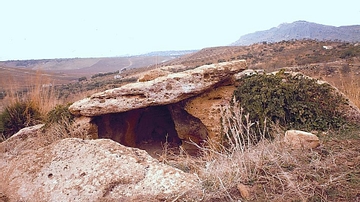
The Dolmen of Sciacca
Young Man Playing the Piano by Caillebotte
References
- Paolo Orlandini. "L'espansione di Gela nella Sicilia centro-meridionale." Kokalos VIII, 1962, p. 79.
- Piccolo, S. Ancient Stones: The Prehistoric Dolmens of Sicily. Thornham/Norfolk, 2013
Cite This Work
APA Style
Piccolo, S. (2017, October 25). Dolmenic Cyst of Butera (Sicily). World History Encyclopedia. https://www.worldhistory.org/image/7487/dolmenic-cyst-of-butera-sicily/
Chicago Style
Piccolo, Salvatore. "Dolmenic Cyst of Butera (Sicily)." World History Encyclopedia, October 25, 2017. https://www.worldhistory.org/image/7487/dolmenic-cyst-of-butera-sicily/.
MLA Style
Piccolo, Salvatore. "Dolmenic Cyst of Butera (Sicily)." World History Encyclopedia, 25 Oct 2017, https://www.worldhistory.org/image/7487/dolmenic-cyst-of-butera-sicily/.
