


Seeds and wild grasses were processed with round or oval grinders (manos) of hard quartzitic sandstone. These were rubbed against a larger mill stone to make flour. A depression in the lower stone's surface prevented spillage. The abundance of grinding stones shows that plant food made up a significant part of the diet at this time. From Nabta Playa E75-6, Western Desert, Egypt. Middle Neolithic. (The British Museum, London).
About the Author

Related Images
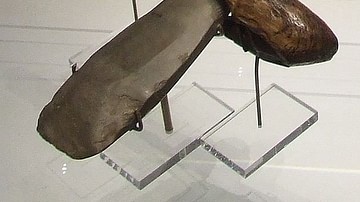
Neolithic Stone Axe with Wooden Handle

Egyptian Grinding Grain

Egyptian Wooden Statue of a Woman Grinding Cereals

Grinding Sugar Cane in a Windmill
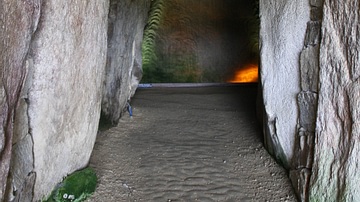
Neolithic Tumulus Interior, Locmariaquer

Neolithic Gold Bead
Cite This Work
APA Style
Amin, O. S. M. (2016, September 29). Grinding Stone from Nabta Playa. World History Encyclopedia. https://www.worldhistory.org/image/5715/grinding-stone-from-nabta-playa/
Chicago Style
Amin, Osama Shukir Muhammed. "Grinding Stone from Nabta Playa." World History Encyclopedia, September 29, 2016. https://www.worldhistory.org/image/5715/grinding-stone-from-nabta-playa/.
MLA Style
Amin, Osama Shukir Muhammed. "Grinding Stone from Nabta Playa." World History Encyclopedia, 29 Sep 2016, https://www.worldhistory.org/image/5715/grinding-stone-from-nabta-playa/.
