
Celebrate Our Anniversary with Trivia!
Join us on August 23 for a free virtual trivia party featuring questions about ancient civilizations, U.S. history, unusual historical facts, pop culture, and more.


According to the inscription on the diorite piece of stele, it belongs to King Naram-Sin. It was found in Pir Hüseyin, a village near Diyarbakır. As it shows the borders of the Akkadian State in the era of Naram-Sin and reflects the artistic features of that era, it is one of the most important pieces of evidence concerning the Akkadian culture. King Naram-Sin, who ruled in the 3rd millennium BCE, entitled himself as the "King who brought peace to 4 regions". This title represents the 4 principal directions and symbolizes Naram-Sin's becoming the "King of Universe" after conquering the cities of Ebla and Elam, i.e. the west and the east. Diorite, found in Diyarbakir, Akkadian era, 2254-2215 BCE. (Istanbul Archeological Museum/Ancient Orient Museum)
About the Author

Related Images
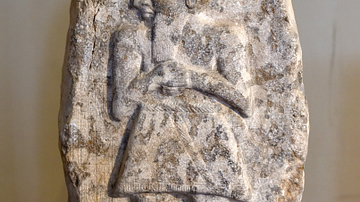
Akkadian Stele of Ilšu-rabi from Tell Abu Sheeja
Napoleon Leaving Elba

Napoleon's Return from Elba
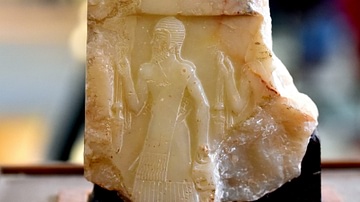
Akkadian Soldier on Naram-Sin Victory Stele from Wasit

Map of the Akkadian Empire at Its Height - Ruling the Four Quarters of the World
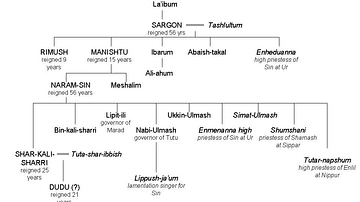
The Akkadian Dynasty
Cite This Work
APA Style
Amin, O. S. M. (2014, April 08). Stele of the Akkadian king Naram-Sin. World History Encyclopedia. https://www.worldhistory.org/image/2550/stele-of-the-akkadian-king-naram-sin/
Chicago Style
Amin, Osama Shukir Muhammed. "Stele of the Akkadian king Naram-Sin." World History Encyclopedia, April 08, 2014. https://www.worldhistory.org/image/2550/stele-of-the-akkadian-king-naram-sin/.
MLA Style
Amin, Osama Shukir Muhammed. "Stele of the Akkadian king Naram-Sin." World History Encyclopedia, 08 Apr 2014, https://www.worldhistory.org/image/2550/stele-of-the-akkadian-king-naram-sin/.
