


The Ming Dynasty (1368-1644) marked the restoration of native Han Chinese rule after the collapse of the Mongol-led Yuan Dynasty (1271-1368). Founded by the Hongwu Emperor (Zhu Yuanzhang, reign 1368-1398), the Ming state reasserted centralized imperial authority, rebuilt agrarian production, and reestablished the Confucian civil service examination system as the foundation of governance. Determined to prevent a return to foreign domination, early Ming rulers strengthened frontier defenses, reorganized provincial administration, and revived ritual orthodoxy to legitimize their rule. Under the Yongle Emperor (reign 1402-1424), the dynasty projected power outward, relocating the capital to Beijing and sponsoring the maritime expeditions of Zheng He (1405-1433), which briefly expanded China’s diplomatic and commercial reach across the Indian Ocean world.
Yet structural tensions, court factionalism, fiscal strain, peasant unrest, and renewed pressure from steppe powers gradually weakened imperial resilience. By the mid-17th century, internal rebellion combined with Manchu intervention led to the fall of Beijing in 1644 and the establishment of the Qing Dynasty (1644-1912).
About the Author
Related Images

Ming Dynasty Empire, c. 1409 CE

Map of the Ming Dynasty Territory

Map of the Shang Dynasty of China, c. 1100 BCE - Bronze, Kingship, and Networks in the Yellow River World

Map of the Tang Dynasty of China, c. 669 CE
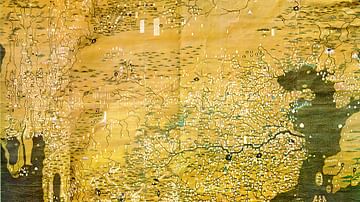
Da Ming Hunyi Tu

Map of Yuan Dynasty China
Cite This Work
APA Style
Netchev, S. (2026, February 13). Map of the Ming Dynasty of China, 1368-1644. World History Encyclopedia. https://www.worldhistory.org/image/21583/map-of-the-ming-dynasty-of-china-1368-1644/
Chicago Style
Netchev, Simeon. "Map of the Ming Dynasty of China, 1368-1644." World History Encyclopedia, February 13, 2026. https://www.worldhistory.org/image/21583/map-of-the-ming-dynasty-of-china-1368-1644/.
MLA Style
Netchev, Simeon. "Map of the Ming Dynasty of China, 1368-1644." World History Encyclopedia, 13 Feb 2026, https://www.worldhistory.org/image/21583/map-of-the-ming-dynasty-of-china-1368-1644/.
