


The Imperial Roman Army formed the backbone of Roman power from the establishment of the Principate under Augustus (reign 27 BCE–14 CE) to the collapse of imperial authority in the West (c. 480 CE). More than a fighting force, it functioned as a state institution that enforced borders, suppressed revolts, built infrastructure, and projected Roman authority across three continents. Its hierarchical organization, standardized, salaried, and centrally commanded, represented a decisive shift from the citizen militias of the Republic to a permanent, professional army loyal to the emperor.
At its core stood the legion, typically numbering several thousand heavy infantry supported by auxiliary units drawn from across the empire. While the number of legions fluctuated (often around two dozen at any one time), their internal structure, clear chains of command, defined ranks, and standardized equipmen, enabled discipline, coordination, and adaptability. Over time, reforms responding to external pressure and internal crisis reshaped recruitment, tactics, and deployment, particularly in the late empire. Yet despite these changes, the Roman army remained a central instrument of imperial cohesion, illustrating how military organization could sustain political authority across vast and diverse territories for centuries.
About the Author
Related Images

Centurion

French Foreign Legion, Bir Hakeim
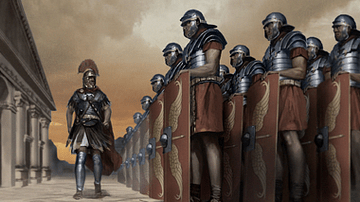
Roman Legion
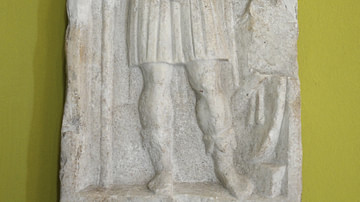
Roman Legionary from Legio XI Claudia
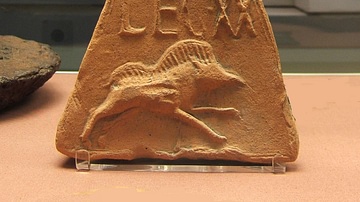
Symbol of Legion XX
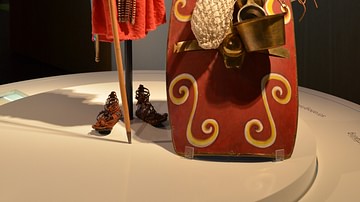
Roman Legionary Kit
Cite This Work
APA Style
Netchev, S. (2023, July 03). Organization of the Imperial Roman Army. World History Encyclopedia. https://www.worldhistory.org/image/17572/organization-of-the-imperial-roman-army/
Chicago Style
Netchev, Simeon. "Organization of the Imperial Roman Army." World History Encyclopedia, July 03, 2023. https://www.worldhistory.org/image/17572/organization-of-the-imperial-roman-army/.
MLA Style
Netchev, Simeon. "Organization of the Imperial Roman Army." World History Encyclopedia, 03 Jul 2023, https://www.worldhistory.org/image/17572/organization-of-the-imperial-roman-army/.
