


The Wars of the Roses (1455–1487) were a prolonged series of dynastic civil wars that destabilized England during the late 15th century, fought between two rival branches of the Plantagenet dynasty: the House of York, symbolized by the white rose, and the House of Lancaster, represented by the red rose. The conflict emerged from weak royal authority and contested succession under Henry VI (reign 1422–1461; briefly restored 1470–1471), whose inability to govern effectively intensified noble rivalries. Political power fractured as magnates mobilized private armies, turning disputes over legitimacy into open warfare.
Over more than three decades, the struggle was marked by shifting alliances, intermittent battles, and dramatic reversals of fortune, including multiple changes of king. The conflict culminated in 1485 at the Battle of Bosworth Field, where Henry Tudor defeated Richard III (reign 1483–1485). With Henry’s accession as Henry VII (reign 1485–1509) and the final defeat of Yorkist resistance in 1487, the wars came to an end. The establishment of the Tudor dynasty brought a period of political consolidation, strengthened royal authority, and reduced the power of the nobility - laying the foundations for a more centralized English monarchy in the early modern era.
About the Author
Related Images
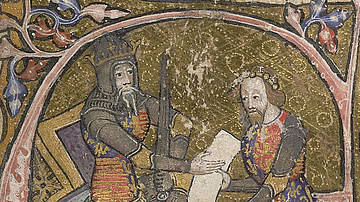
Edward III & Edward the Black Prince
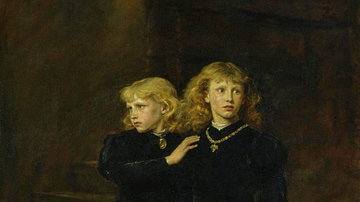
The Princes in the Tower

Henry, Duke of Lancaster

Arms of Richard, Duke of York

Richard III & Henry VII, Stained Glass Window

Richard Duke of York, Frontispiece Detail
Cite This Work
APA Style
Netchev, S. (2026, December 31). The Wars of the Roses in England (1455–1487): House of York vs. House of Lancaster. World History Encyclopedia. https://www.worldhistory.org/image/11846/the-wars-of-the-roses-in-england-1455-1487/
Chicago Style
Netchev, Simeon. "The Wars of the Roses in England (1455–1487): House of York vs. House of Lancaster." World History Encyclopedia, December 31, 2026. https://www.worldhistory.org/image/11846/the-wars-of-the-roses-in-england-1455-1487/.
MLA Style
Netchev, Simeon. "The Wars of the Roses in England (1455–1487): House of York vs. House of Lancaster." World History Encyclopedia, 31 Dec 2026, https://www.worldhistory.org/image/11846/the-wars-of-the-roses-in-england-1455-1487/.
