
Search
Remove Ads
Advertisement
Search Results

Image Gallery
Imagining the Amazons: Women Warriors in Greco-Roman Art
Amazon warriors frequently appeared in the art, literature, and mythology of the ancient Greeks and Romans. The idea of a female warrior society existing on the fringes of civilization continues...

Article
Music & Dance in Ancient Egypt
Music and dance were highly valued in ancient Egyptian culture, but they were more important than is generally thought: they were integral to creation and communion with the gods and, further, were the human response...

Video
Did WW1 Really Promote Women's Rights?
During the First World War, women stepped into men’s jobs for the first time ever, thousands of women served abroad on the front lines, women’s football even became a hugely popular sport, and the war is thought...

Definition
Bastet
Bastet is the Egyptian goddess of the home, domesticity, women's secrets, cats, fertility, and childbirth. She protected the home from evil spirits and disease, especially diseases associated with women and children. As with many deities...
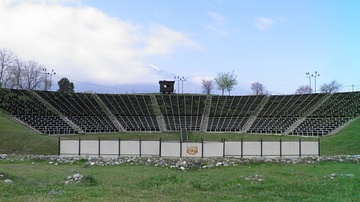
Image
Dion Hellenistic Theatre, Greece
The Hellenistic Theatre at Dion in Macedon with Mount Olympus in the background. The theatre was built into a natural hill during the 3rd century BCE. It underwent several phases of modification during the reign of...

Video
Women & The Family - Ancient Greek Society 08
Ancient Greek women had very different outcomes in life depending on where they were born, and the class they were born into. Some could be isolated, valued only for their ability to bear children. Some...

Interview
Interview: The First Black Archaeologist: A Life of John Wesley Gilbert by John Lee
John Lee joins World History Encyclopedia to tell us all about his new book, The First Black Archaeologist: A Life of John Wesley Gilbert. Kelly (WHE): Thank you so much for...
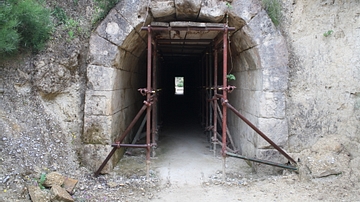
Image
Stadium Entrance, Nemea, Greece
This 36.5m long passageway, constructed in 330-320 BCE leads from the athletes locker room into the stadium and is the entrance through which the athletes would have first appeared to the waiting spectators.

Image
Stadium Entrance Tunnel (East End), Nemea, Greece
Constructed in 330-320 BCE, the entrance to the stadium is mostly hidden from view from the spectators in the stadium and the athletes entrance would have been all the more dramatic.

Image
Stadium Starting Block, Nemea, Greece
The starting line or 'balbis' consisted of 12 lanes with posts held in vertical sockets between which a catapult mechanism or 'hysplex' of tensed rope would prevent any athlete from false starting. A judge would...
