
Search
Did you mean: Dolmen?
Remove Ads
Advertisement
Search Results

Definition
Women's March on Versailles
The Women's March on Versailles, also known as the October March or the October Days, was a defining moment in the early months of the French Revolution (1789-1799). On 5 October 1789, crowds of Parisian market women...

Article
Women in the Byzantine Empire
Women in the Byzantine Empire (4th to 15th century CE) were, amongst the upper classes, largely expected to supervise the family home and raise children while those who had to work for a living did so in most of the...

Article
Women in Ancient Greece
Women in the ancient Greek world had few rights in comparison to male citizens. Unable to vote, own land, or inherit, a woman's place was in the home and her purpose in life was the rearing of children. That is a general...

Article
Women in the Old Testament
Modern practitioners of Judaism and Christianity often turn to the Bible for stories concerning women and their roles in ancient religion and society. It is important to acknowledge that these stories were written by men...

Article
Women Scientists in the Scientific Revolution
Women scientists during the Scientific Revolution (1500-1700) were few in number because male-dominated educational institutions, as well as scientific societies and academies, barred women entry, meaning...

Article
Women's Work in Ancient Egypt
Women in ancient Egypt had greater rights than in any other civilization of the time. They could own land, initiate divorce, own and operate their own business, become scribes, priests, seers, dentists, and doctors...

Article
Women in the Mongol Empire
Women in the Mongol Empire (1206-1368 CE) shared the daily chores and hardships of steppe life with men and were largely responsible for tending animals, setting up camps, childrearing, producing food and cooking it. Having...

Article
Women in Ancient China
Women in ancient China did not enjoy the status, either social or political, afforded to men. Women were subordinate to first their fathers, then their husbands, and finally, in the case of being left a widow, their sons...
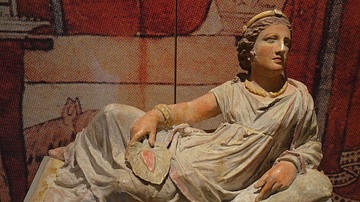
Collection
Women in the Ancient World
In many cultures of antiquity women had to battle the disadvantages of rules and conventions made for men and by men who dominated government, public life, and society. Nevertheless, many ancient religions had powerful...
Collection
Women of the Protestant Reformation
The contributions of women to the Protestant Reformation (1517-1648) were frequently marginalized in the past but have gained wider recognition in the present era. Many women played important roles in spreading...
