
Search
Remove Ads
Advertisement
Search Results

Article
Dogs in the Ancient World
Dogs have been a part of the history of human beings since before the written word. The ancient temple of Gobekli-Tepe in Turkey, dated to at least 12,000 years BCE, has provided archaeologists with evidence of domesticated dogs in the Middle...

Article
Sammu-Ramat and Semiramis: The Inspiration and the Myth
Sammu-Ramat (r. 811-806 BCE) was the queen regent of the Assyrian Empire who held the throne for her young son Adad Nirari III (r. 811-783 BCE) until he reached maturity. She is also known as Shammuramat, Sammuramat, and, most notably, as...

Article
Battle of Waterloo
The Battle of Waterloo (18 June 1815) was the last major engagement of the Napoleonic Wars (1803-1815), fought by a French army under Emperor Napoleon I (r. 1804-1814; 1815) against two armies of the Seventh Coalition. Waterloo resulted in...

Article
5 Top Aces of World War I - The Fighter Pilots Who Became National Heroes
WWI saw the birth of an entirely new form of combat: lone men engaging the enemy in aerial dogfights. The victors became heroes back home, but this was as deadly an occupation as it was an exhilarating one. One bullet, an engine or structural...

Image
Parzival
Wolfram von Eschenbach's Parzival. 15th-century CE manuscript, Heidelberg, Cod. Pal. germ. 339, 135r

Definition
Assyria
Assyria was the region located in the ancient Near East which, under the Neo-Assyrian Empire, reached from Mesopotamia (modern-day Iraq) through Asia Minor (modern Turkey) and down through Egypt. The empire began modestly at the city of Ashur...

Definition
Susa
Susa was one of the oldest cities in the world and part of the site is still inhabited as Shush, Khuzestan Province, Iran. Excavations have uncovered evidence of continual habitation dating back to 4395 BCE but that early community grew from...

Definition
Early Dynastic Period in Mesopotamia - Era of Many of the "Firsts" in Civilization
The Early Dynastic period in Mesopotamia is the modern-day archaeological term for the era in Mesopotamian history – circa 2900 to circa 2350/2334 BCE – during which some of the most significant cultural advances were made, including the...
Definition
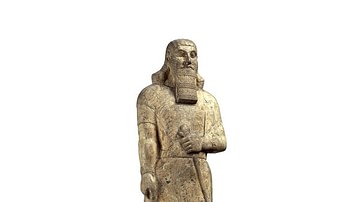
Ashurnasirpal II
Ashurnasirpal II (r. 884-859 BCE) was the third king of the Neo-Assyrian Empire. His father was Tukulti-Ninurta II (r. 891-884 BCE) whose military campaigns throughout the region provided his son with a sizeable empire and the resources to...

Article
The Causes of WWI
The origins of the First World War (1914-18) are many and varied, with some even dating back several decades, but a political assassination in the Balkans in the summer of 1914 was the spark that blew up Europe's political powder keg, that...
