
Search
Remove Ads
Advertisement
Search Results

Article
Child Labour in the British Industrial Revolution
Children were widely used as labour in factories, mines, and agriculture during the British Industrial Revolution (1760-1840). Very often working the same 12-hour shifts that adults did, children as young as five years old were paid a pittance...

Article
6 Key Instruments of the Scientific Revolution
The Scientific Revolution (1500-1700) was driven by several key inventions, all scientific instruments that became essential to achieving a greater understanding of the world around us. With instruments like the telescope, microscope, thermometer...

Article
Cutty Sark - Fastest Ship in the World
With thousands of square feet of canvas capturing every breath of the trade winds, a 19th-century tea clipper was the absolute pinnacle of sailing evolution. The Cutty Sark was just such a ship, carrying tea and then wool across the far-flung...
Article
Origin of the Sweat Lodge
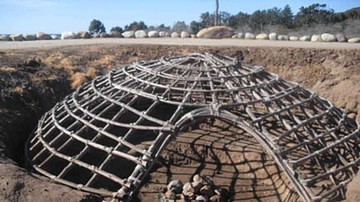
The sweat lodge is a temporary or permanent structure integral to Native American culture and frequently used in spiritual ceremonies. The lodge is often a low, dome-shaped, structure heated by hot rocks which produce steam as water is poured...
Article
Ûñtsaiyĭ', the Gambler
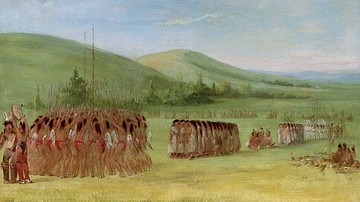
Ûñtsaiyĭ', the Gambler is a legend of the Cherokee nation, known as a Wonder Story, which features supernatural characters, sometimes interacting with mortals, sometimes with each other. In Ûñtsaiyĭ', the Gambler, all the characters are supernatural...

Article
Britain and the Suez Canal - 75 Years of Colonialism & Crisis
The Suez Canal in Egypt, which links the Mediterranean to the Red Sea, was taken over by the British in 1882 and was only reluctantly released 75 years later. The seizure in the 19th century caused an international furore every bit as damaging...

Image
Stephenson's Rocket Replica
A working replica of the Rocket, a pioneering steam-powered locomotive invented by Robert Stephenson (1803-59) in 1829.

Image
Stephenson's Rocket
The Rocket locomotive steam engine was designed in 1829 by Robert Stephenson (1803-1859) during the Industrial Revolution. The locomotive won the 1829 Rainhill Trials and so was used to pull passenger carriages on the world's first intercity...

Image
SS Great Eastern
An illustration by Charles Parsons showing the steam-powered SS Great Eastern. It was designed by Isambard Kingdom Brunel (1806-1859) and completed in 1858. It was the largest ship in the world at 211 metres (692 ft) long. Great Eastern could...
Image
James Nasmyth
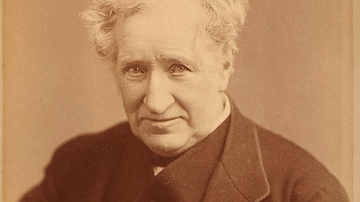
A photograph of the Scottish engineer James Nasmyth (1808-1890) who invented the steam hammer in 1839 during the Industrial Revolution. (The Science Museum, London)
