
Search
Remove Ads
Advertisement
Search Results
Image
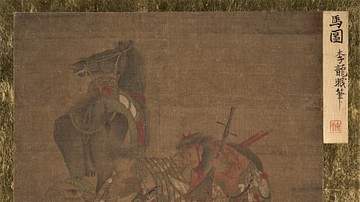
Mongol with Horse & Camel
A Chinese ink painting of a Mongol rider with a horse and camel. The painting was produced by an unidentified artist c. 1271–1368, when China was ruled by the Mongolian Yuan Dynasty established by Kublai Khan. Ink...
Image
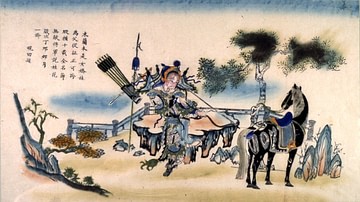
Mulan with a Horse
Scene of Mulan a with horse. Printed in ink, colour on paper.
1867 CE, Dingmao, China
Image
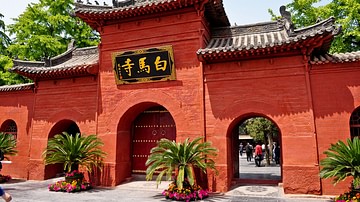
White Horse Temple
According to tradition, White Horse Temple, founded in 68 CE is the oldest Buddhist temple in China.
Image
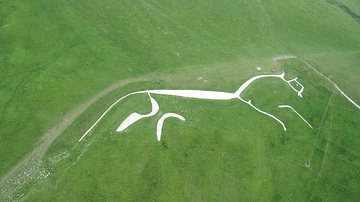
White Horse of Uffington
The white horse of Uffington, a Bronze Age carving into the chalk hills in Oxfordshire, England.
Image
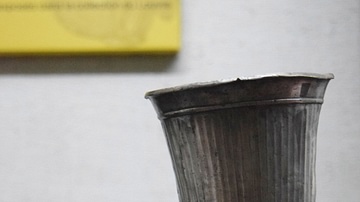
Persian Horse Head Rhyton
This is a horse head rhyton cast in silver, dating from the 5th century BCE when Armenia was under Persian control. It was found at the Erebuni Fortress in Yerevan, Armenia. (Erebuni Historical and Archaeological Preserve...
Image
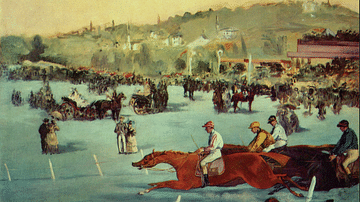
Horse Racing by Manet
An 1872 oil on canvas painting, Horse Racing, by Edouard Manet (1832-83), the French modernist painter. The was a work commissioned by a racing enthusiast. Manet was a frequent race-goer himself, particularly the races held...
Image
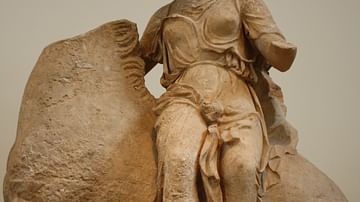
Nereid Rising from the Ocean on a Horse
A Nereid (or Aura) riding a horse as she rises from the Ocean. Pentelic marble, c. 380 BCE. By the sculptor Timotheos. (National Archaeological Museum, Athens).

Image
White Horse Temple, Luoyang
The White Horse Buddhist temple at the former Chinese capital of Luoyang. Late Han dynasty, 1st century CE.
Image
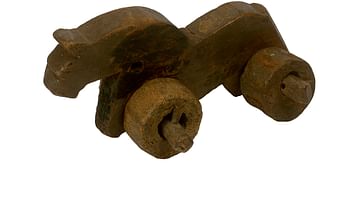
Byzantine Toy Horse
This wooden toy horse dates to the 4th to 5th century CE. Measures 14 cm in length. Photo © Bibliotheca Alexandrina Antiquities Museum/Photo by Emad Omar. Used by permission.
Image
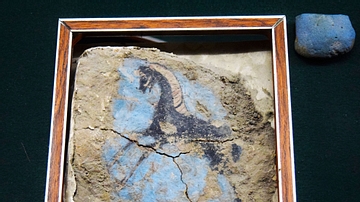
Urartian Horse Mural Fragment
This mural fragment of a running horse once adorned the large palace hall at Erebuni Fortress, which is located in present-day Yerevan, Armenia. It dates from roughly the 8th century BCE. (Erebuni Historical and Archaeological...
