
Search
Remove Ads
Advertisement
Search Results

Definition
Civil Constitution of the Clergy
The Civil Constitution of the Clergy was a law passed in July 1790 during the French Revolution (1789-1799), which caused the immediate subordination of the Catholic Church in France to the French government. An attempt...
Definition
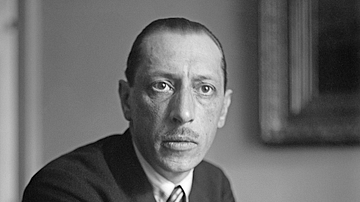
Igor Stravinsky
Igor Stravinsky (1882-1971) was a Russian composer best known for his works for the stage, such as the ballets The Firebird, Petrushka, and the groundbreaking The Rite of Spring. The modernist composer lived in Switzerland, France...

Definition
Geronimo
Geronimo (Goyahkla, l. c. 1829-1909) was a medicine man and war chief of the Bedonkohe tribe of the Chiricahua Apache nation, best known for his resistance against the encroachment of Mexican and Euro-American settlers and armed forces...

Definition
Third Crusade
The Third Crusade (1189-1192 CE) was launched to retake Jerusalem after its fall to the Muslim leader Saladin in 1187 CE. The Crusade was led by three European monarchs, hence its other name of 'the Kings' Crusade'. The three leaders...

Definition
Grossmunster
Grossmünster (“large cathedral” in German) is a Romanesque ex-cathedral situated in the heart of Zürich, Switzerland, which was built over the course of the 11th and 13th centuries CE. According to legend, the Holy Roman Emperor...
Definition
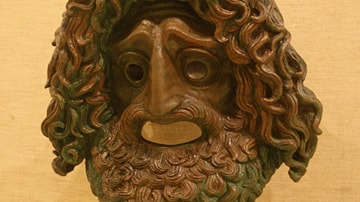
Ancient Greek Tragedy
Greek tragedy was a popular and influential form of drama performed in theatres across ancient Greece from the late 6th century BCE. The most famous playwrights of the genre were Aeschylus, Sophocles, and Euripides and many...

Definition
Omaha Beach - D-Day's Deadliest Beach
Omaha Beach was one of two beaches attacked by the US armed forces on D-Day, 6 June 1944. Strong German defences on the bluff overlooking the beach made this area the most difficult of the Normandy landings, but...

Definition
Pluto
Pluto is the god of the Underworld in Roman mythology. His Greek counterpart was Hades. Pluto chose never to sit on Olympus with the other gods and goddesses, preferring to remain in the Underworld. Family Pluto (Hades) was the son...

Definition
Lugh
Lugh (also Lug, Luga) was one of the most important Celtic gods, particularly in Ireland, and he represented the sun and light. Although originating as an all-wise and all-seeing deity, Lugh was later thought of as a historical figure...

Definition
First Anglo-Sikh War
The First Anglo-Sikh War (1845-6) was a short and bloody conflict won by the British East India Company (EIC) against the Sikh Empire. The EIC was keen to expand into northern India, but the Sikh army was a well-trained, well-equipped...
