
Search
Remove Ads
Advertisement
Search Results

Image
Loki Gives Sif the Gold-Spun Hair
An image presenting the trickster Loki giving Sif newly-made gold-spun hair. Loki was an entity in Norse mythology who was involved in misdeeds against multiple gods and mortals. One of them was cutting off the golden...

Image
Ragnarök
The wolf Fenrir broken loose from his chains and Thor fighting the Midgard serpent with his hammer Mjollnir (also Mjǫllnir, Mjölnir) at Ragnarök from Norse mythology, illustration by Johannes Gehrts from Walhall Germanische Götter und...

Image
Stenkvista Runes
Stenkvista church runes, a runescape carving in granite, photographed by Berig, Södermanland, c. 900-1100 The sculpture is one of many runestones from the end of the Viking Age in Scandinavia and is a memorial dedicated by sons...

Article
Polynesian Navigation & Settlement of the Pacific - Migration in Oceania
Polynesian navigation of the Pacific Ocean and its settlement began thousands of years ago. The inhabitants of the Pacific islands had been voyaging across vast expanses of ocean water...

Article
Harald Bluetooth & the Conversion of Denmark
In Scandinavia, Christianity spread due to the support and encouragement of political rulers at the top of the society above all else. Conversion, defined here as the actions taken by kings or clerics to...

Article
Viking Prophecy: The Poem Völuspá of the Poetic Edda
The Völuspá (Old Norse: Vǫluspá) is a medieval poem of the Poetic Edda that describes how the world might have come into shape and would end according to Norse mythology. The story of about 60 stanzas...

Article
Siege of Sevastopol in 1941-2
The siege of Sevastopol (Oct 41 to Jul 42) was an attack by Axis forces on the base of the USSR's Black Sea Fleet during Operation Barbarossa of the Second World War (1939-45). Sevastopol (aka Sebastopol) had one of...
Article
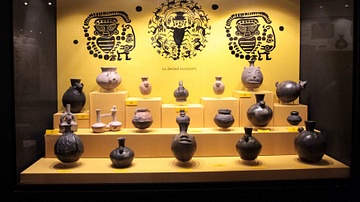
Pre-Inca Civilisations at the Tucume Museum
On 1 November 2015 CE, at the annual dinner hosted by the British Guild of Travel Writers at the Savoy Hotel in London, it was announced that the Tucume Museum in northern Peru had won the prestigious award...

Article
The Vikings in Iceland
The medieval sources on the discovery and settlement of Iceland frequently refer to the explorers as “Vikings” but, technically, they were not. The term “Viking” applies only to Scandinavian raiders, not to Scandinavians...

Article
The Legendary Settlement of Iceland
It is said that the early Norse settlers of Iceland in the Viking Age (c. 790-1100 CE) believed it was the home of the gods because of the tale of the creation of the world in Norse religion. In the time before...
